 Save
Save There's something about the way feta crumbles between your fingers that transported me back to a sunny afternoon in a small Greek taverna, watching the owner's wife stuff grape leaves with such practiced ease. Years later, I was standing in my own kitchen on a Tuesday evening, craving that same Mediterranean simplicity, and it hit me: why not bring that filling into chicken instead? The first time I rolled up those breasts, my hands were clumsy with the motion, but the smell of spinach and garlic hitting hot oil immediately felt like coming home to a place I'd never actually been.
I made these for my sister's book club on a rainy spring evening, and I remember the nervous energy of plating them, not knowing if the filling would stay put when sliced. When everyone leaned over their plates and actually got quiet—the kind of quiet that means delicious—I knew I'd stumbled onto something good. One guest asked for the recipe before dessert even arrived, which told me everything I needed to know.
Ingredients
- Chicken breasts: Four medium-sized ones, boneless and skinless, which cook evenly when you pound them gently to thickness. Don't skip the pounding; it's what keeps them from drying out.
- Baby spinach: Fresh or thawed frozen works beautifully, though fresh spinach has a delicate texture that melts into the filling more gracefully.
- Feta cheese: The tanginess is non-negotiable here—it's what makes your filling taste authentically Mediterranean rather than just cheesy.
- Red onion: Small and finely chopped, it adds a whisper of bite that makes the feta taste even creamier by comparison.
- Garlic: Minced fresh is worth the extra thirty seconds; it perfumes everything as it softens.
- Fresh dill and parsley: These aren't garnish thoughts here—they're structural to the flavor, so don't underestimate their role.
- Olive oil: Use your good oil for serving drizzle, but regular oil for the cooking and searing; save the expensive stuff for moments where it actually matters.
- Oregano: Dried oregano has a concentration that works here, hitting notes that fresh can't quite reach in the oven's heat.
- Lemon juice: Squeezed fresh right before baking, it brings everything into focus at the last moment.
Tired of Takeout? 🥡
Get 10 meals you can make faster than delivery arrives. Seriously.
One email. No spam. Unsubscribe anytime.
Instructions
- Prep your canvas:
- Preheat your oven to 200°C (400°F) while you set up your workspace. Lay each chicken breast between two sheets of parchment paper and pound it gently with a meat mallet until it's about 1 cm thick—you're creating an even surface so every bite cooks at the same pace.
- Build the filling:
- Heat 1 tablespoon of olive oil in a large skillet over medium heat, then add your finely chopped red onion and garlic, letting them soften and release their fragrance into the kitchen for about 2 minutes. Add the chopped spinach and stir gently until it's wilted and any excess moisture has cooked away, roughly 2 more minutes, then pull it off the heat to cool slightly.
- Combine the magic:
- While the spinach mixture cools, combine it in a bowl with the crumbled feta, fresh dill, and parsley, stirring until everything is evenly distributed. The mixture should feel textured and chunky, not mushy.
- Roll with intention:
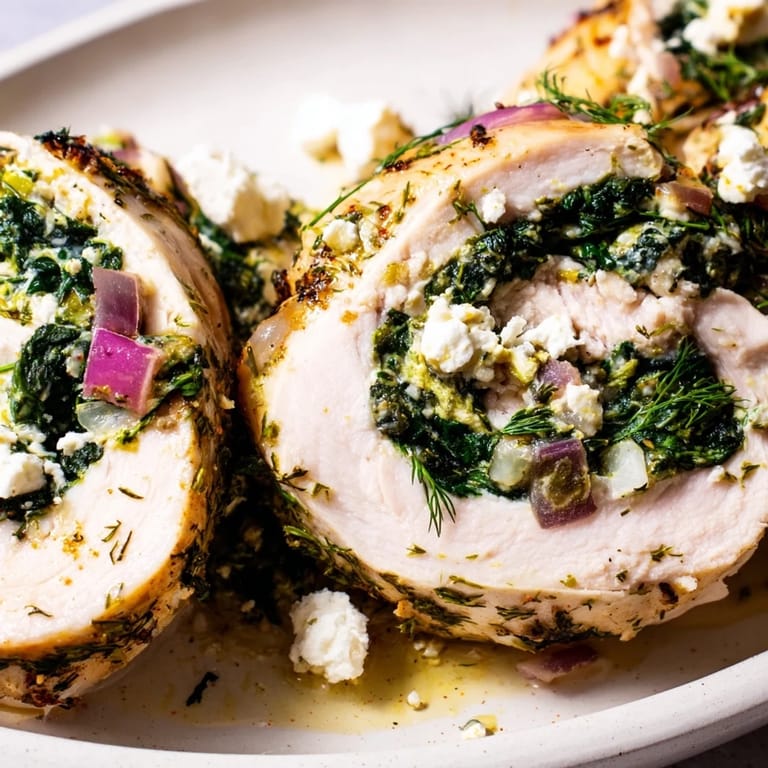
- Lay each chicken breast flat, spread about a quarter of the filling along one edge, and roll it tightly toward the opposite side, then secure with a toothpick or a small piece of kitchen twine. The tighter you roll, the better it stays together during cooking.
- Sear for color and flavor:
- Heat 2 tablespoons of olive oil in an ovenproof skillet over medium-high heat until it shimmers, then carefully place your stuffed rolls seam-side down and let them brown for 2-3 minutes on each side until they're golden and smell irresistible. Don't move them around; let them sit and develop that caramelized exterior.
- Season and finish:
- Sprinkle the oregano over the rolls and squeeze fresh lemon juice across them, letting the brightness cut through the richness before they go into the oven. The aroma at this point should make you pause.
- Bake to perfection:
- Transfer the skillet to the preheated oven and bake for 18-22 minutes, checking that the internal temperature reaches 74°C (165°F) at the thickest part. The chicken will look slightly firmer to the touch when it's ready, and any juices that escape should run clear.
- Rest and serve:
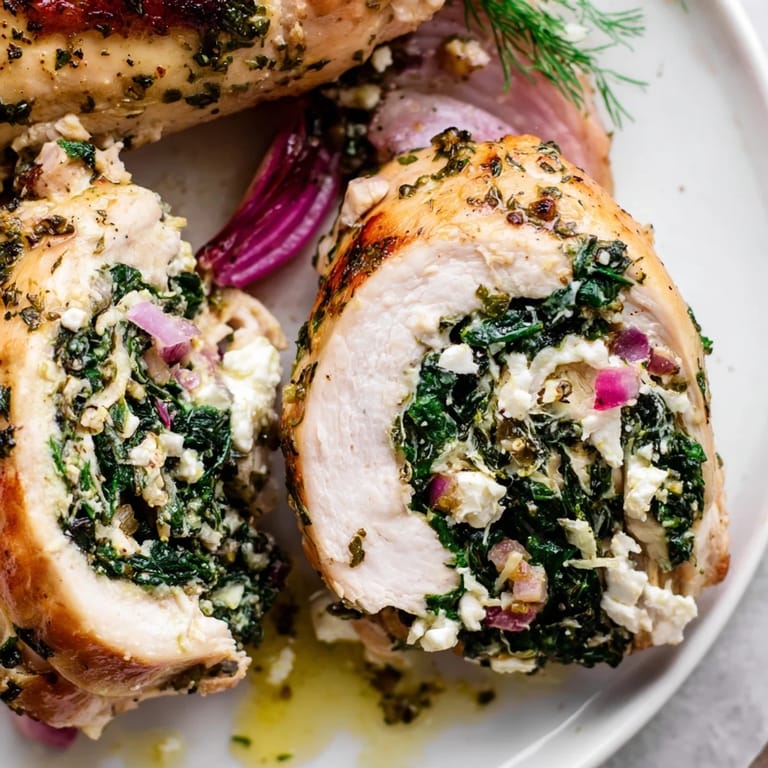
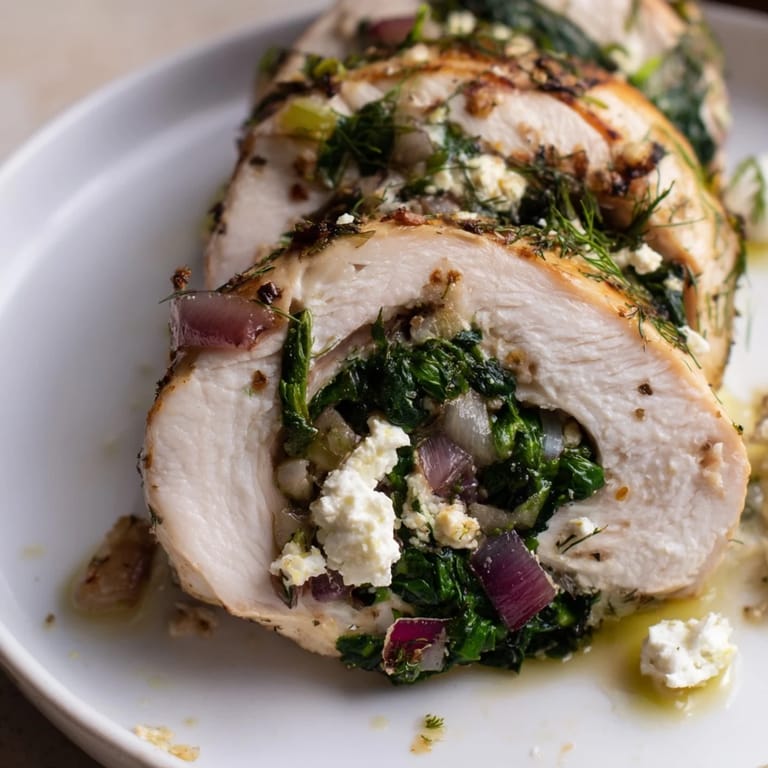
- Remove the toothpicks or twine before serving, and slice the rolls gently if you want to show off that beautiful filling. Let them rest for a minute or two so the juices redistribute.
 Save
Save There's a moment that happens right when you pull these out of the oven, when the kitchen is steaming and the scent of oregano and lemon fills every corner, and you realize you've made something that tastes like it came from somewhere else—somewhere with olive trees and afternoon naps and time to enjoy food. That's the moment I live for when I cook.
Variations Worth Exploring
If you want to swap vegetables, kale or Swiss chard will hold up beautifully to the cooking process, though they have a slightly earthier edge than spinach. Sun-dried tomatoes add a sweet-tart richness that complements the feta perfectly, while toasted pine nuts bring an unexpected textural elegance. I've also experimented with adding a thin layer of hummus or labneh to the bottom of each roll before the filling, which adds a creamy cushion that makes the whole thing feel even more luxurious.
Sides That Make Sense
A proper Greek salad with cucumbers, tomatoes, olives, and that same feta is the natural companion, letting you repeat flavors in different contexts. Roasted potatoes tossed with olive oil and garlic soak up any pan juices beautifully, while tzatziki on the side gives you a cool, creamy counterpoint to the warm, herb-forward chicken. A crisp white wine like Assyrtiko or a simple rosé will make the whole meal feel intentional rather than thrown together.
Why This Works
The marriage of Mediterranean flavors isn't accidental—it's built on centuries of cooking together, where feta, fresh herbs, and lean proteins all live in the same region and understand each other. When you sear the chicken first, you're not just creating color; you're sealing in moisture and building flavor layers that make every component taste richer than it actually is. The lemon juice at the end isn't sweetness—it's clarity, the moment everything clicks into place.
- Make the filling ahead and refrigerate it; everything cooks faster when the filling is cold.
- If your skillet isn't ovenproof, sear the rolls in one pan and transfer them to a baking dish for the oven portion.
- Leftovers taste even better the next day, and the rolls slice more cleanly when they've had time to cool and set.
 Save
Save This is the kind of dish that feels like you're showing off when you're really just following your instincts and letting good ingredients do what they naturally want to do. Once you make these, you'll find reasons to make them again and again.
Recipe FAQ
- → Can I substitute other greens for spinach?
Yes, kale or Swiss chard can be used as substitutes and offer a similar texture and flavor when sautéed.
- → What is the best way to prepare the chicken breasts for rolling?
Gently pounding the chicken breasts to an even thickness helps with even cooking and easier rolling.
- → How can I ensure the filling stays inside during cooking?
Secure the rolls tightly using toothpicks or kitchen twine before searing and baking.
- → Can I add extra ingredients to the filling?
Sun-dried tomatoes or pine nuts add delightful texture and flavor without overpowering the filling.
- → What are good side dishes to serve with these chicken rolls?
Roasted potatoes, Greek salad, or a side of tzatziki complement the rolls and complete the meal.
- → Is this dish suitable for gluten-free diets?
Yes, the dish is naturally gluten-free unless pre-crumbled feta with gluten traces is used; always check labels.