 Save
Save My neighbor knocked on my door one rainy Sunday with a chuck roast she didn't know what to do with. I grabbed my Dutch oven and told her to come back in four hours. The smell that filled my apartment that afternoon—beef browning in olive oil, herbs steaming under a heavy lid—turned into a tradition we still keep every fall. That roast taught me that the best meals don't need fancy techniques, just time and a little patience.
I made this for my parents on their anniversary, and my dad, who never asks for recipes, wanted to know every single step. He stood in the kitchen with a notepad while I reheated the leftovers, writing down the part about deglazing with wine like it was some kind of secret. Now he makes it every winter and calls to tell me how his carrots turned out.
Ingredients
- Boneless beef chuck roast (3 to 4 lb): This cut has enough marbling to stay moist during the long roast, and it shreds beautifully once it is done.
- Kosher salt and black pepper: Season generously because the beef needs bold flavor to stand up to hours in the oven.
- Carrots, parsnips, onions, potatoes, celery: Use large chunks so they hold their shape and soak up all the savory liquid without turning to mush.
- Garlic cloves (smashed): Smashing them releases their oils quickly and infuses the broth with a mellow, sweet depth.
- Tomato paste: A small amount adds richness and a subtle tang that balances the wine and broth.
- Beef broth: Choose a good-quality broth because it becomes the backbone of your sauce.
- Dry red wine: It deglazes the pot and adds complexity, but you can swap it for more broth if you prefer.
- Worcestershire sauce: This brings a hint of umami that deepens every bite.
- Fresh thyme, rosemary, bay leaves: Use whole sprigs so you can fish them out easily before serving.
- Olive oil: Just enough to sear the beef and build a flavorful crust on the bottom of the pot.
Tired of Takeout? 🥡
Get 10 meals you can make faster than delivery arrives. Seriously.
One email. No spam. Unsubscribe anytime.
Instructions
- Preheat and Prep:
- Set your oven to 300°F (150°C) and pat the beef completely dry with paper towels so it sears instead of steams. Season every side with salt and pepper.
- Sear the Beef:
- Heat olive oil in your Dutch oven over medium-high heat until it shimmers, then sear the roast on all sides until deeply browned. This takes about 3 to 4 minutes per side and builds the flavor base for everything that follows.
- Sauté the Vegetables:
- Toss in the onions, carrots, parsnips, potatoes, and celery, stirring occasionally for 5 minutes until they start to soften. Add the garlic and tomato paste, cooking for 1 minute until fragrant.
- Deglaze and Simmer:
- Pour in the red wine and scrape up all the browned bits stuck to the bottom of the pot. Let it simmer for 2 minutes to cook off the alcohol and concentrate the flavors.
- Add Liquid and Herbs:
- Nestle the beef back into the pot and pour in the beef broth and Worcestershire sauce. Tuck in the thyme, rosemary, and bay leaves so the liquid comes about halfway up the sides of the beef.
- Roast Low and Slow:
- Bring everything to a gentle simmer, cover tightly with the lid, and slide the pot into the oven. Roast for 3 to 3 and a half hours, until the beef is fork-tender and the vegetables are soft.
- Rest and Serve:
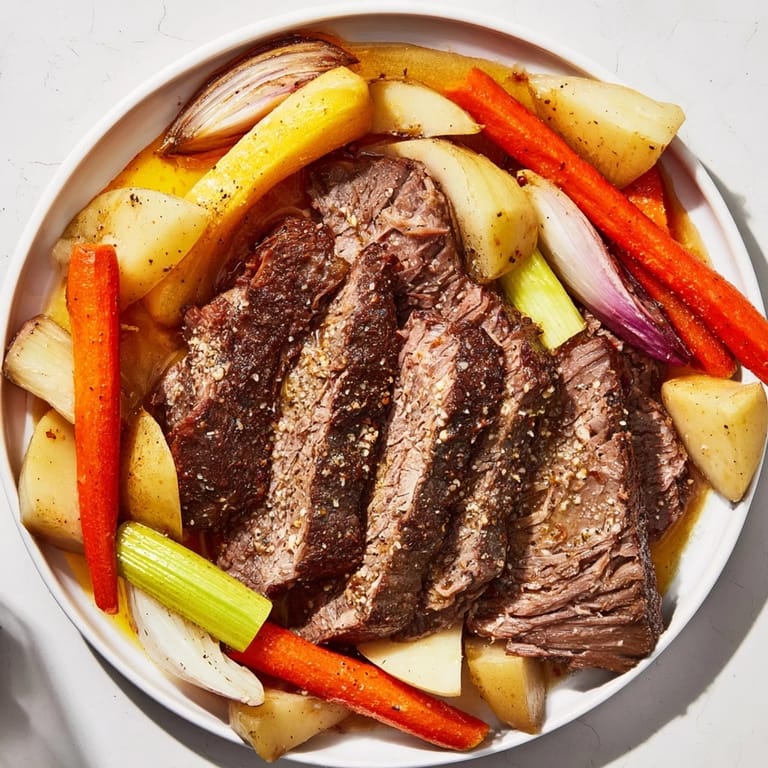
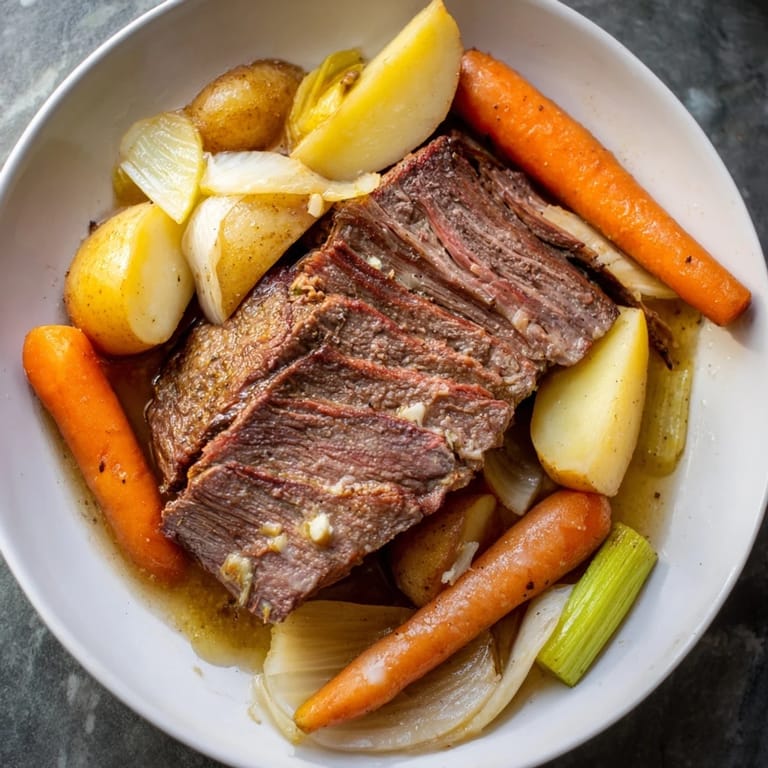
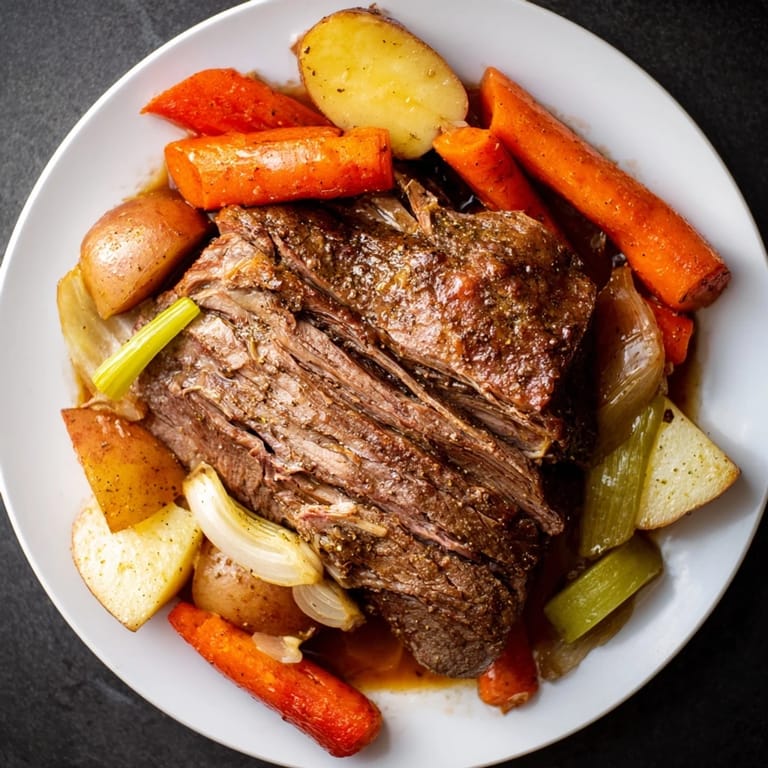
- Pull the pot from the oven, fish out the herb stems and bay leaves, and let the beef rest for 10 minutes. Slice or shred the meat, then serve it with the vegetables and pan juices spooned over the top.
 Save
Save One winter evening, I served this to a friend who had just moved across the country and was missing home. She took one bite, closed her eyes, and said it tasted exactly like her grandmother's Sunday dinners. I didn't have the heart to tell her I'd only learned to make it a year ago.
Making the Sauce Even Richer
If you want a thicker, more luscious sauce, transfer the beef and vegetables to a serving platter once they are done, then set the pot on the stove over medium heat. Let the juices simmer and reduce by half, or whisk in a cornstarch slurry (1 tablespoon cornstarch mixed with 2 tablespoons cold water) and cook until glossy. This step makes the sauce cling to the meat like velvet.
Choosing Your Vegetables
Parsnips add a subtle sweetness that I love, but you can swap them for turnips or extra carrots if they are hard to find. I once used sweet potatoes instead of regular potatoes, and the slight sweetness played beautifully against the savory beef. Just keep the pieces large so they do not dissolve into the broth.
Storage and Leftovers
Store leftovers in an airtight container in the fridge for up to 4 days, and reheat gently on the stove with a splash of broth to keep everything moist. The flavors deepen overnight, so day-two pot roast is almost better than the original.
- Shred leftover beef and pile it onto crusty bread with a smear of horseradish for the best sandwich you will eat all week.
- Chop everything into smaller pieces, add extra broth, and turn it into a hearty stew.
- Freeze portions in individual containers for up to 3 months and reheat straight from frozen on busy nights.
 Save
Save This pot roast has become my answer to cold evenings and crowded tables, the kind of dish that turns a regular dinner into something people remember. I hope it does the same for you.
Recipe FAQ
- → What cut of beef is best for slow roasting?
Boneless beef chuck roast is ideal as it becomes tender and flavorful when cooked low and slow.
- → Can I substitute parsnips with other vegetables?
Yes, turnips make a great substitute or you can omit them based on availability or preference.
- → How do I ensure the beef stays moist during cooking?
Searing the meat before roasting locks in juices, and cooking it in broth with herbs helps maintain moisture.
- → Is it necessary to use red wine in the braising liquid?
Red wine adds depth of flavor but can be replaced with extra beef broth if preferred.
- → How can I thicken the pan juices for serving?
After removing the beef and vegetables, simmer the juices on stove and reduce by half or mix in a cornstarch slurry for thicker sauce.
- → What herbs complement slow-roasted beef and vegetables best?
Fresh thyme, rosemary, and bay leaves enhance the savory profile with aromatic undertones.