 Save
Save The first time I watched tahdig being made, I stood mesmerized in a cramped kitchen in Tehran, listening to that unmistakable sizzle and crackle coming from beneath a pot's lid. My grandmother never measured anything, just knew by instinct when the crust had formed—golden, crispy, almost crackling with promise. Years later, I finally understood that the magic wasn't luck; it was respect for the rice and patience with the heat. Now whenever I make this, that sound takes me right back, and I feel like I'm cooking alongside her invisible hand guiding mine.
I remember making this for a dinner party when I was still terrified of cooking Persian food, convinced I'd ruin everything. My partner kept checking the pot, nervous the whole thing would burn, but I kept saying, 'Trust the process, trust the sizzle.' When I inverted that pot and the golden tahdig slid perfectly onto the platter, the whole table went quiet for a second before erupting. That moment taught me that sometimes the scariest things in cooking yield the most rewarding results.
Ingredients
- Basmati rice (2 cups): Use only basmati for its delicate, separate grains and subtle aroma; avoid short-grain varieties that will turn mushy.
- Salt (1 tablespoon for soaking): This seasons the rice gently from the start and helps it cook evenly, a trick that makes all the difference.
- Saffron threads (1/4 teaspoon): Grind them first to release their flavor and color; this is non-negotiable for authentic depth.
- Hot water (2 tablespoons): Steeping saffron in hot water unlocks its earthiness and golden hue.
- Plain Greek yogurt (4 tablespoons): The secret weapon for tahdig; it creates a tangy, crispy base that caramelizes beautifully without burning.
- Vegetable oil (2 tablespoons plus extra): Use a neutral oil to prevent the yogurt mixture from sticking before the crust sets.
- Unsalted butter (2 tablespoons, melted): Butter adds richness and helps achieve that golden color on the tahdig.
- Ground turmeric (1/2 teaspoon, optional): A whisper of turmeric adds subtle warmth and a faint golden glow to the rice.
- Ground black pepper (1/2 teaspoon): This cuts through the richness and adds a quiet sophistication.
Tired of Takeout? 🥡
Get 10 meals you can make faster than delivery arrives. Seriously.
One email. No spam. Unsubscribe anytime.
Instructions
- Rinse and soak the rice:
- Run cold water over the rice in a fine sieve until the water runs completely clear—this removes the starch that would otherwise make it gluey. Soak it in salted water for at least 30 minutes so each grain absorbs moisture evenly and cooks to perfection.
- Parboil the rice:
- Bring a large pot of water to a rolling boil, add the drained rice, and cook for just 5 to 6 minutes until it's tender but still has a slight firmness in the center. You're not cooking it fully; you want it to finish steaming in the pot later.
- Prepare the saffron:
- Grind the saffron threads into a powder between your fingers or in a mortar, then steep in hot water for 10 minutes to unlock its color and subtle floral notes. The water will turn a beautiful deep gold, and the aroma will tell you it's ready.
- Build the tahdig crust mixture:
- In a bowl, combine the yogurt, 1 tablespoon of that golden saffron water, turmeric, and about 1 cup of the parboiled rice. Stir gently until everything is evenly mixed; this mixture will be your magic crust.
- Heat the pot:
- Pour the oil and melted butter into your heavy-bottomed pot and set it over medium heat. Let it warm until you can feel the heat rising but it's not smoking—you want the pan hot enough for the tahdig to sizzle gently.
- Spread the tahdig base:
- Carefully spoon the yogurt-rice mixture onto the bottom of the pot and spread it into an even layer, pressing gently so it makes contact with the hot oil and butter. This layer is what will transform into that coveted crispy crust.
- Layer the remaining rice:
- Gently pile the rest of the parboiled rice over the yogurt layer, mounding it loosely toward the center so steam can circulate. Drizzle the remaining saffron water over the top and use the handle of a wooden spoon to poke a few holes through the rice so steam can escape.
- Steam the rice:
- Wrap your pot's lid in a clean kitchen towel and cover tightly—the towel traps moisture and prevents condensation from dripping back onto the rice. Cook over medium heat for 10 minutes, then reduce to low and let it cook gently for 35 to 40 minutes, listening for that soft crackling sound that tells you the tahdig is forming.
- Rest and invert:
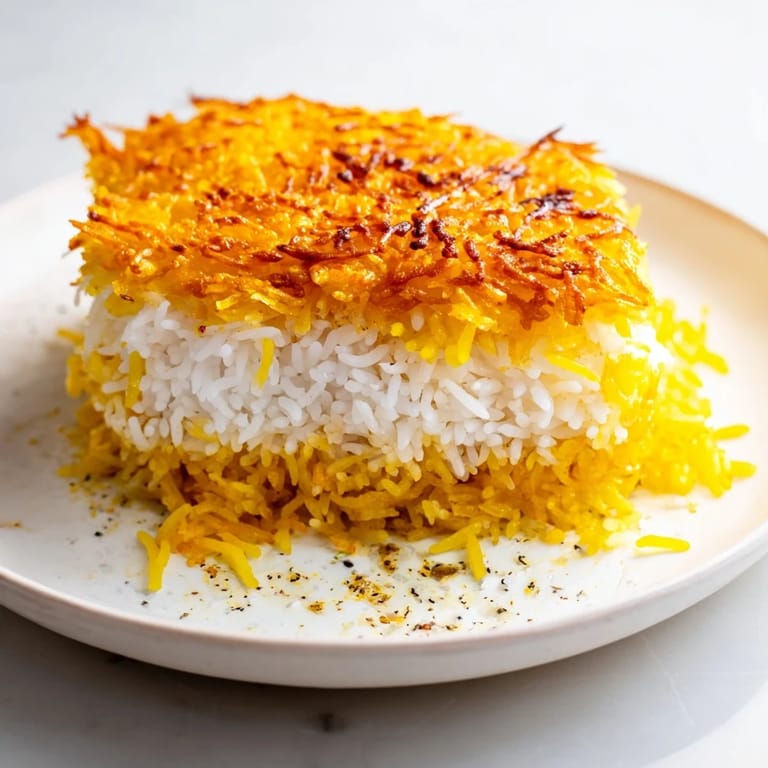
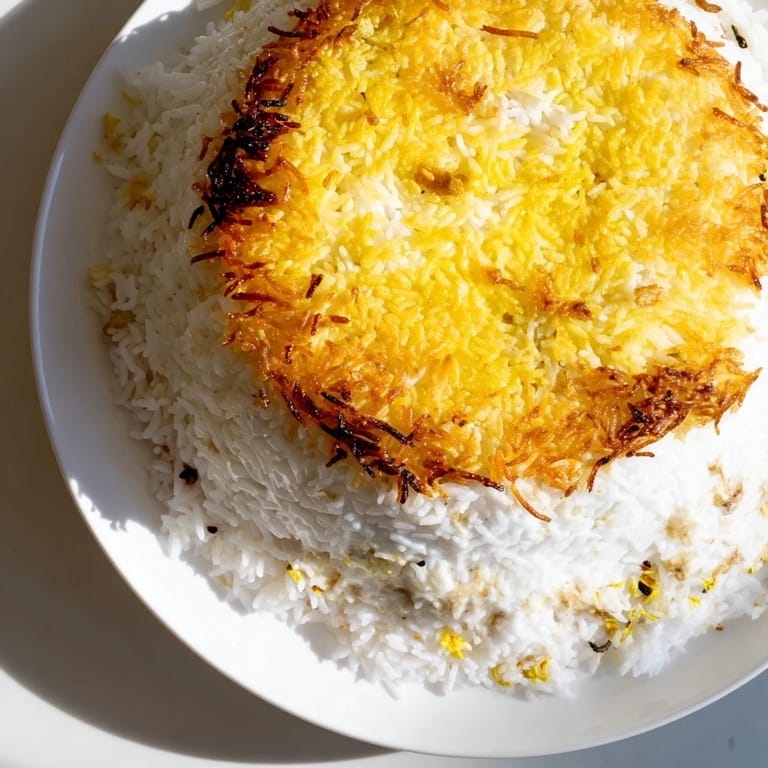
- Remove from heat and let the rice rest undisturbed for 5 minutes so the crust sets and releases from the pot. Place your serving platter upside down over the pot, take a breath, and invert it confidently so the golden tahdig slides onto the platter like a crown on top.
 Save
Save One evening, a friend who grew up in Iran tasted this for the first time and her eyes filled with tears. She said it reminded her of her mother's kitchen, of the exact smell of saffron and butter, of coming home. That's when I realized this dish isn't really about technique or ingredients—it's about carrying someone else's memory and love in your hands, and serving it with warmth.
The Art of the Tahdig
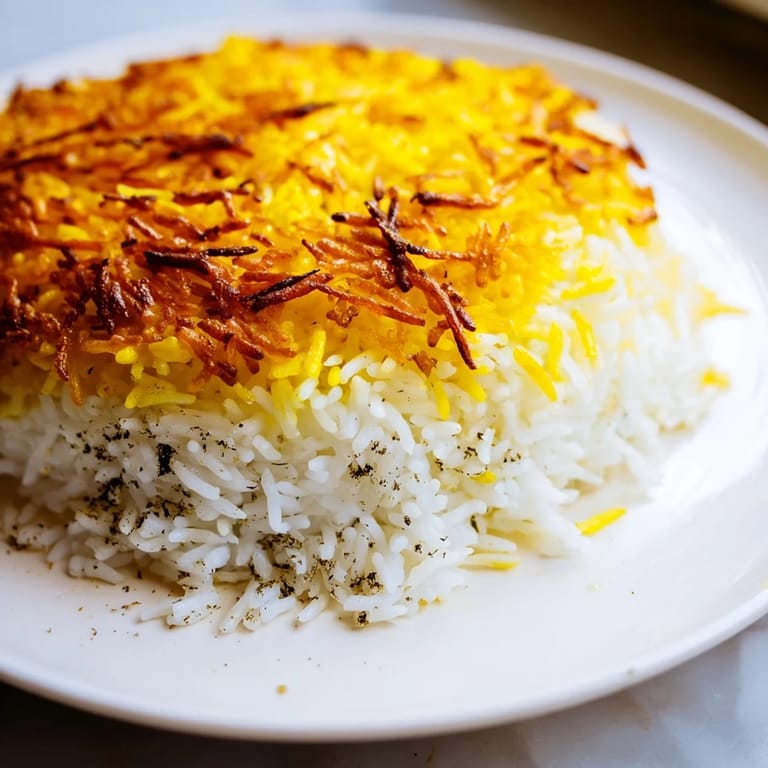
Tahdig literally means 'bottom of the pot,' and Persian cooks treat it like the finest art form. The crust is never an accident; it's the result of deliberate choices—the right temperature, the right pot, the right moment to flip. I've learned that the best tahdig makers listen more than they watch, letting their ears and intuition guide them. The sizzle is a conversation between you and the rice, and once you learn to listen, you'll never make it the same way twice.
Customizing Your Tahdig
While the yogurt base is the classic, tahdig is endlessly flexible. Some cooks swear by thinly sliced potatoes that crisp up like golden chips, while others use flatbread pieces that soak up all the saffron and butter. I once tried a tahdig with caramelized onions layered underneath and it changed everything. The principle stays the same: give the bottom of the pot something that loves heat and will turn golden under pressure.
Flavors That Elevate Everything
Persian rice is a canvas for subtle aromatics, and the choices you make here ripple through every bite. Beyond the saffron and turmeric already in this recipe, consider what else speaks to you. Cinnamon sticks and cardamom pods added to the boiling water infuse the entire pot with warmth, while fresh herbs like parsley or mint stirred through at the end add brightness. For garnish, dried barberries scattered across the top add a tart pop that balances the richness, or crispy fried onions if you want texture and comfort combined.
- A pinch of ground cinnamon in the yogurt mixture adds an almost imperceptible sweetness that makes people ask what your secret is.
- Crush a few cardamom pods and toss them into the boiling water for a floral, slightly minty undertone that elevates the whole dish.
- If you have access to dried barberries or sumac, these are the finishing touches that transform good tahdig into memorable tahdig.
 Save
Save Every time I make tahdig, I'm reminded that the simplest dishes—rice, butter, heat, patience—can hold the most meaning. This isn't just a side dish; it's an invitation to slow down and be present in the kitchen.
Recipe FAQ
- → What is tahdig in Persian cooking?
Tahdig is the golden, crispy crust formed at the bottom of the pot when cooking Persian rice, prized for its texture and flavor.
- → How do you get a crispy tahdig crust?
Using a saffron-yogurt mixture spread on the pot’s base, cooking the rice over medium then low heat slowly caramelizes the bottom, creating crispiness.
- → Can other ingredients be used for tahdig besides yogurt-rice?
Thin potato slices or flatbread can replace the yogurt-rice layer for different tahdig variations with unique textures.
- → Why soak and parboil the rice before cooking?
Soaking removes excess starch and parboiling softens the rice while keeping grains slightly firm, ensuring fluffy texture and good crust formation.
- → How is saffron used in this dish?
Saffron threads are steeped in hot water, then mixed into the yogurt and drizzled over cooked rice for rich aroma and color.
- → Is this dish suitable for special diets?
Yes, it is vegetarian and gluten-free, though it contains dairy from yogurt and butter.