 Save
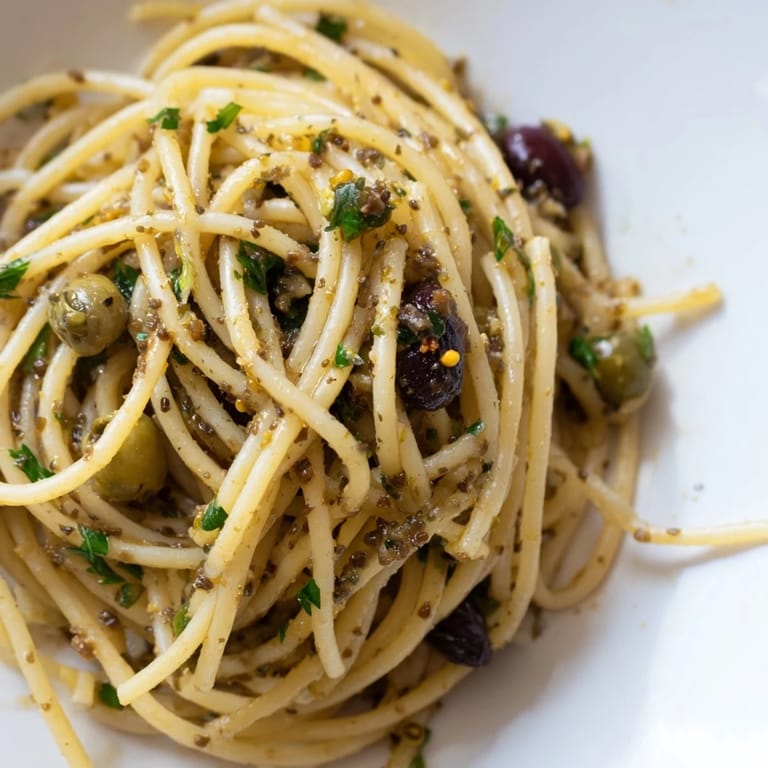
Save My neighbor came back from Sardinia with a jar of something dark and glossy, insisting I taste it on warm bread. That first bite of salty, briny tapenade rewired my understanding of what olives could do. I went home that afternoon and tossed a rough version with leftover spaghetti, and it tasted like the Mediterranean had moved into my kitchen. No cream, no cheese, just bold, unapologetic flavor clinging to every strand. I've been making variations ever since, and this one stays closest to that spontaneous first attempt.
I made this for a friend who swore she hated olives. She stood in my kitchen, suspicious, watching me pulse the food processor. When she finally tried a forkful, she went quiet for a moment, then asked for the recipe. Sometimes a dish changes someone's mind not by hiding an ingredient, but by showing it at its best. That night taught me that context and balance can turn a dislike into a craving.
Ingredients
- Mixed pitted olives: Kalamata brings deep, winey richness while green olives add a sharper, almost grassy bite; using both creates a tapenade that doesn't taste one-note.
- Capers: These tiny bursts of brine and tang cut through the olive oil and keep the sauce lively instead of heavy.
- Garlic: Raw garlic here is punchy and bold, but if you're sensitive, blanch the cloves in boiling water for thirty seconds to mellow them out.
- Fresh parsley: It adds a grassy brightness that balances all the salty, fermented flavors; don't skip it or the tapenade will feel flat.
- Fresh lemon juice: Just a teaspoon wakes everything up and keeps the richness from coating your palate too heavily.
- Extra-virgin olive oil: Use something fruity and robust; this is where the sauce gets its silky body and the oil carries every other flavor to the pasta.
- Spaghetti or linguine: Long noodles let the chunky tapenade cling in all the right places; short pasta works too, but you lose some of that satisfying twirl.
- Reserved pasta water: This starchy liquid is the secret to making the tapenade coat the noodles instead of pooling at the bottom of the bowl.
Tired of Takeout? 🥡
Get 10 meals you can make faster than delivery arrives. Seriously.
One email. No spam. Unsubscribe anytime.
Instructions
- Boil the pasta:
- Bring a large pot of heavily salted water to a rolling boil, then add the pasta and cook until it still has a slight bite in the center. Before draining, scoop out a cupful of that cloudy, starchy water and set it aside.
- Pulse the tapenade:
- Combine olives, capers, garlic, parsley, and lemon juice in a food processor and pulse until coarsely chopped, then drizzle in the olive oil with the motor running until you have a chunky, spreadable paste. Season with black pepper and taste; it should be bold and briny.
- Toss everything together:
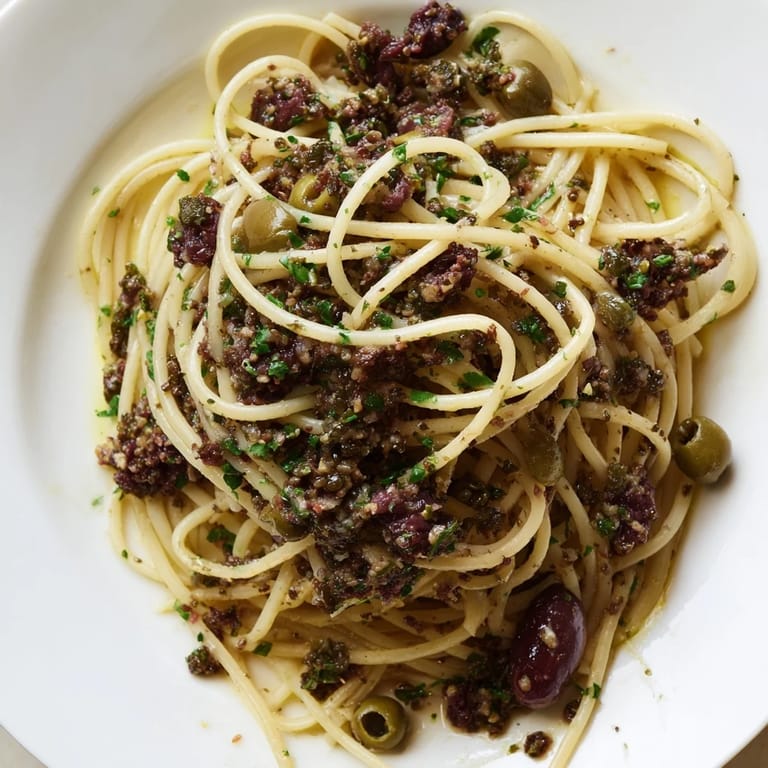
- Return the drained pasta to the warm pot, add the tapenade, and toss vigorously, splashing in reserved pasta water a little at a time until the sauce clings to every strand. The pasta should look glossy, not dry or swimming in oil.
- Serve immediately:
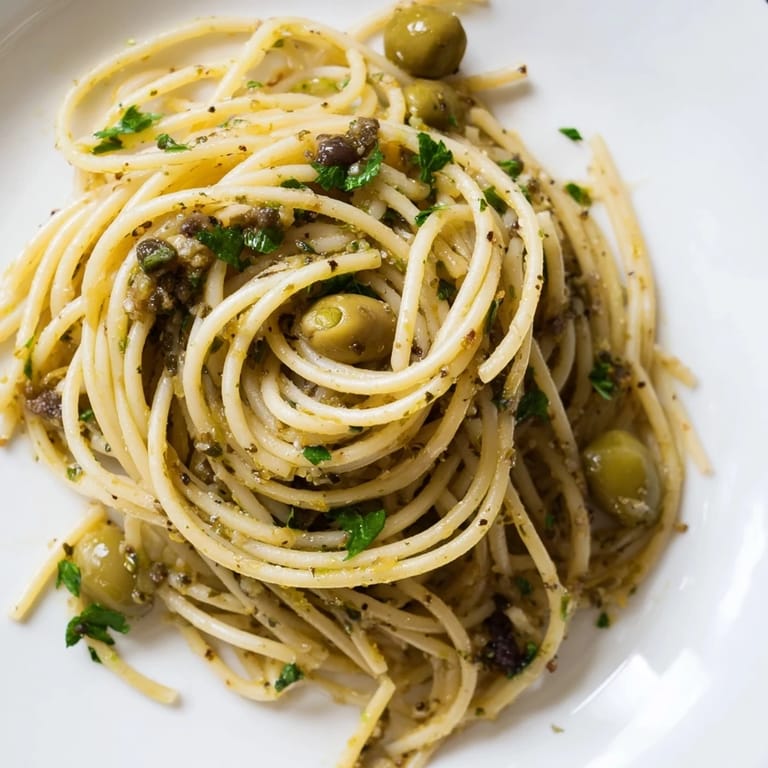
- Divide among bowls and finish with a sprinkle of fresh parsley, a few strands of lemon zest, and Parmesan if you're not keeping it vegan. Eat it while it's hot and the flavors are still bright.
 Save
Save One summer evening, I served this on the back porch with nothing but a bowl of arugula on the side and a bottle of cold white wine. We ate with our fingers half the time, twirling pasta and laughing as the sun went down. It wasn't fancy, but it felt luxurious in the way simple food can when you're surrounded by good company. That's the magic of this dish; it doesn't need much to feel like a celebration.
Choosing Your Olives
I've tried this with all Kalamata, all green, and every combination in between. The best results come from mixing varieties because Kalamata alone can taste almost sweet and heavy, while green alone can be too sharp. If you can find oil-cured or Castelvetrano olives, throw a handful of those in too; they add a buttery note that rounds out the brininess. Just make sure they're pitted, because fishing out pits mid-blend is a mess.
Making It Your Own
A pinch of red pepper flakes in the tapenade turns this into something with a gentle heat that builds as you eat. I've also stirred in a few chopped sun-dried tomatoes when I want a slightly sweeter, more complex sauce. If you're not vegetarian, a couple of anchovy fillets blended into the tapenade add a savory depth that doesn't taste fishy, just richer. Each version feels like a different mood, but the core stays satisfying.
Storing and Reheating
Leftover tapenade keeps in a jar in the fridge for up to a week, and I've used it on everything from scrambled eggs to roasted chicken. The pasta itself doesn't reheat as well; the noodles absorb the sauce and can turn a bit dry. If you do have leftovers, add a splash of olive oil or a spoonful of fresh tapenade when you warm it up to bring it back to life.
- Store tapenade in an airtight jar with a thin layer of olive oil on top to keep it from drying out.
- If the pasta seems oily after sitting, a squeeze of fresh lemon juice at serving time will brighten it right back up.
- This dish tastes best fresh, so if you're cooking for one or two, halve the recipe rather than reheating for days.
 Save
Save This is the kind of meal that makes weeknights feel less like a chore and more like a choice you're excited about. Keep the ingredients on hand, and you'll always have something bold and satisfying waiting in the pantry.
Recipe FAQ
- → Can I use jarred tapenade instead of making it from scratch?
Yes, you can use quality jarred tapenade to save time. Use about 3/4 to 1 cup depending on your preferred intensity. Simply warm it gently and toss with your cooked pasta, adding reserved pasta water to achieve the right consistency.
- → What type of olives work best for this dish?
A combination of Kalamata and green olives provides the best flavor balance, offering richness from the Kalamatas and a briny brightness from the green varieties. Ensure they are pitted to make preparation easier and safer when using a food processor.
- → How do I achieve the silky sauce consistency?
The key is using reserved pasta cooking water. Starch-rich pasta water emulsifies the olive oil with the tapenade, creating a creamy sauce that clings to the noodles. Add it gradually while tossing to reach your desired consistency.
- → Is this dish suitable for vegans?
Absolutely. The dish is naturally vegan when using vegan pasta and omitting Parmesan garnish. All core ingredients—olives, capers, garlic, parsley, lemon, and olive oil—are plant-based, making it perfect for vegan diets.
- → Can I prepare the tapenade ahead of time?
Yes, tapenade can be made up to 3 days in advance and stored in an airtight container in the refrigerator. Allow it to come to room temperature before tossing with pasta, or gently warm it for easier mixing.
- → What pasta shapes work well with tapenade?
Spaghetti, linguine, and fettuccine are ideal as they allow the chunky tapenade to coat the noodles evenly. Short pasta shapes like penne or farfalle also work well, creating nice pockets of tapenade throughout the dish.