 Save
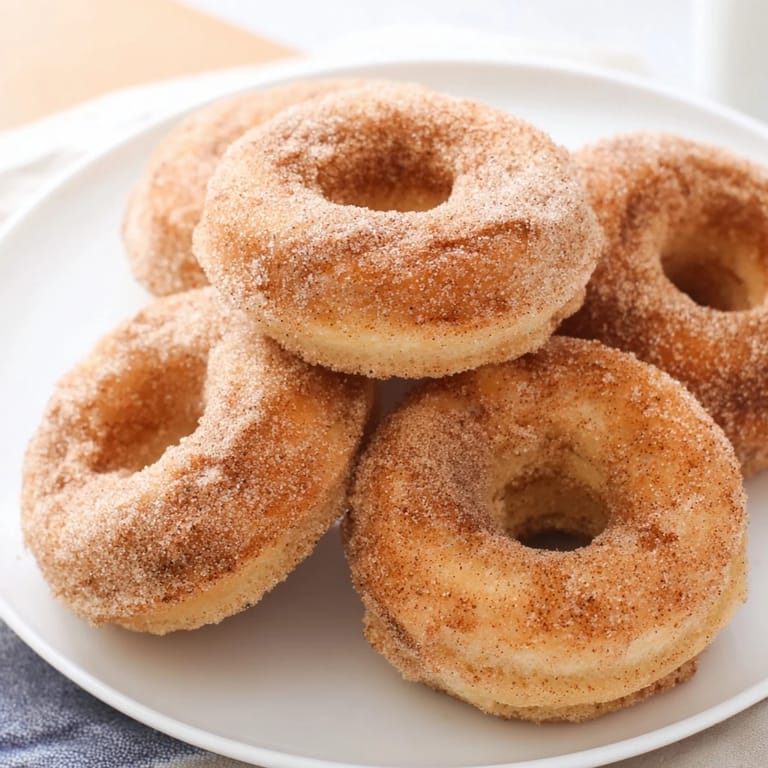
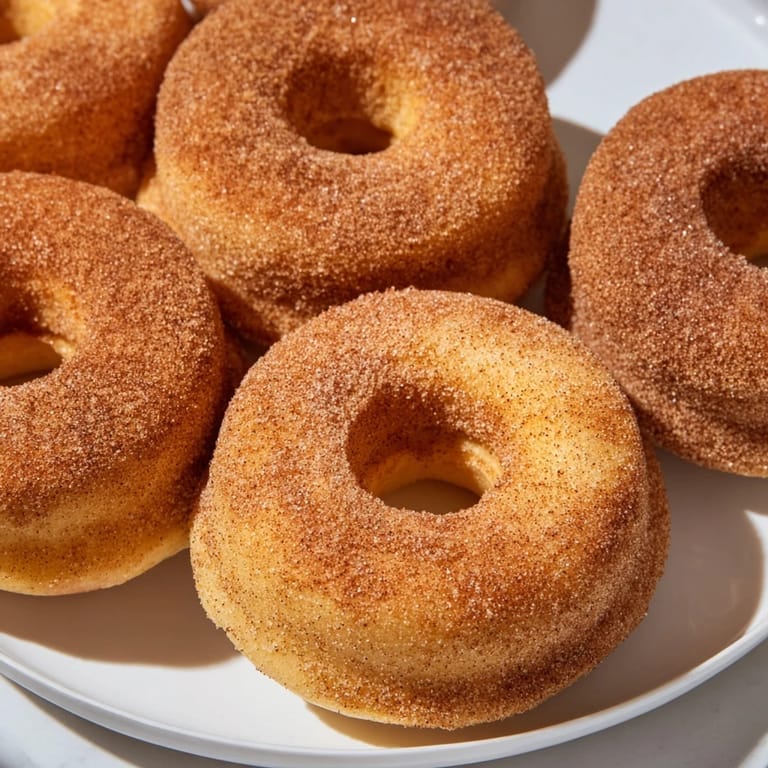
Save There's something about the smell of cinnamon hitting you the moment you walk into the kitchen that just feels like home. I discovered these baked donuts on a lazy Sunday morning when I realized I had buttermilk sitting in the fridge and absolutely zero motivation to drive anywhere for breakfast. What started as a quick idea turned into the kind of donuts that made my family hover around the cooling rack like it was treasure. They're tender, they're quick, and honestly, they've ruined me for the dense, oil-heavy kind.
I made these for my neighbor's daughter's school bake sale, and she came back asking specifically for them. There's a quiet pride in knowing you handed someone a warm donut that tasted like it took hours when you barely spent any time at all. She even asked if I could make them gluten-free next time, which is when I realized these little baked rings had officially crossed from snack to something people actually care about.
Ingredients
- All-purpose flour (2 cups): This is your structure, so don't sift it obsessively like some recipes demand—just scoop and level it off and you'll be fine.
- Granulated sugar (3/4 cup for batter): This sweetens the actual donut, giving it just enough sugar without making them overwhelmingly sweet on their own.
- Baking powder (2 tsp) and baking soda (1/2 tsp): They work together to lift the batter and create that tender crumb you want; don't skip either one.
- Salt (1/2 tsp): It sounds small, but it keeps these from tasting flat or one-dimensional.
- Ground cinnamon (1 tsp in batter, 1 1/2 tsp for coating): Buy the good stuff if you can—cheap cinnamon tastes dusty and won't give you that warm, spiced flavor that makes people ask what smells so good.
- Buttermilk (3/4 cup): If you don't have it, milk mixed with vinegar works in a pinch, but real buttermilk creates a softer crumb that's worth seeking out.
- Eggs (2 large): They bind everything and add richness without making the donuts feel heavy.
- Melted butter (2 tbsp for batter, 3 tbsp for coating): Use real butter—it tastes better and the coating sticks better than oil.
- Vanilla extract (1 tsp): Just a teaspoon adds depth and makes everything taste more indulgent than it actually is.
Tired of Takeout? 🥡
Get 10 meals you can make faster than delivery arrives. Seriously.
One email. No spam. Unsubscribe anytime.
Instructions
- Heat your oven and prep your pan:
- Get your oven to 375°F and lightly grease your donut pan—just a quick spray or a light brush of oil in each cavity. This is one of those moments where people overthink it, but honestly, a little grease is all you need.
- Mix your dry ingredients:
- Whisk together your flour, sugar, baking powder, baking soda, salt, and the cinnamon for the batter. You're not making anything fancy here—just combine them so the leavening agents are evenly distributed.
- Combine your wet ingredients:
- In another bowl, whisk the buttermilk, eggs, melted butter, and vanilla until they're well mixed. This is where you want to be thorough because unlike the dry mixture, these need to actually come together.
- Bring it all together gently:
- Pour the wet ingredients into the dry ones and stir until just combined—and I mean just combined. The second you stop seeing flour streaks, stop stirring, even if the batter looks a tiny bit lumpy. Overmixing is the enemy of tender donuts.
- Fill your pan with intention:
- Spoon or pipe the batter into each donut cavity until it's about three-quarters full. I use a piping bag because it's cleaner and more even, but a spoon works perfectly fine if you don't mind wiping your hands a lot.
- Bake until they spring back:
- Bake for 10 to 12 minutes—they're done when they spring back when you gently touch the top. Don't overbake or they'll be dry, and don't underbake or they'll be gummy in the middle.
- Cool briefly, then move them:
- Let them sit in the pan for about 3 minutes, then turn them out onto a wire rack. That short time in the pan helps them set without becoming rubbery.
- Coat them while they're warm:
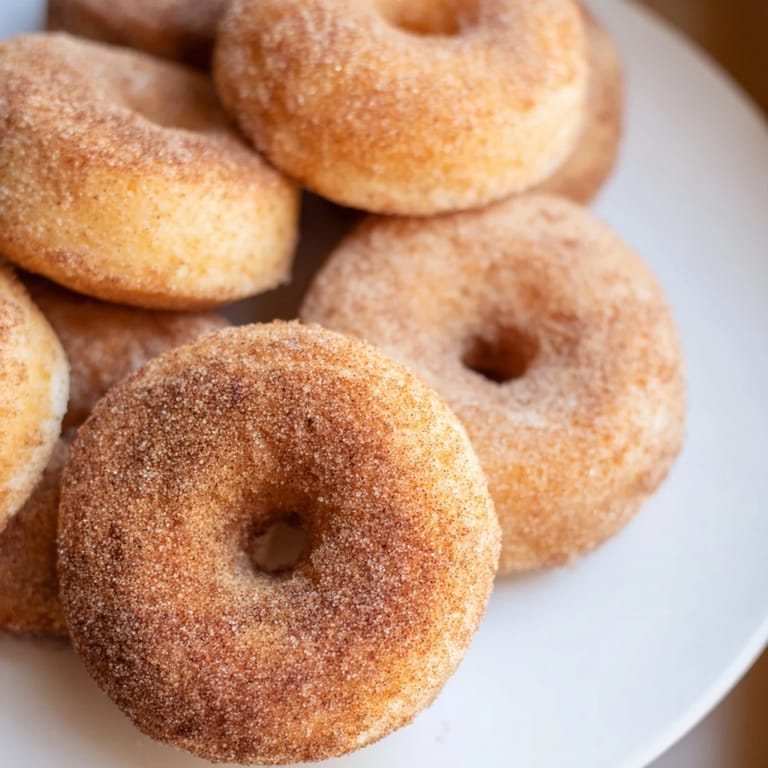
- Mix your cinnamon and sugar in a shallow bowl, brush each warm donut with melted butter, and immediately dip it in the cinnamon-sugar mixture. The warmth makes the coating stick better and helps the sugar dissolve slightly into the donut instead of just sitting on top.
 Save
Save My most honest memory with these donuts is sitting at my kitchen counter at 8 a.m. with coffee, eating one with my hands like a normal person, sugar all over my fingers, thinking about how sometimes the simplest things we make are exactly what we needed. There's something grounding about that.
Storage and Keeping
These donuts are absolutely best the same day you make them—that's when the cinnamon coating is still clinging to the surface and the crumb is at its softest. If you have leftovers (which rarely happens), store them in an airtight container for up to two days and they'll still taste good, though they'll gradually firm up. You can refresh them by warming them in a 300°F oven for about 5 minutes if you want that fresh-baked feeling again.
Variations and Flavor Experiments
Once you've made these a few times, you'll start seeing possibilities everywhere. A pinch of nutmeg mixed into the cinnamon-sugar coating adds a subtle warmth that reminds people of fall even if it's the middle of summer. Some people add a tiny bit of cardamom, which sounds fancy but actually just makes the whole thing taste more interesting without being obvious about it. I've also brushed donuts with maple butter instead of plain melted butter, and that takes them in a completely different direction if you're in the mood for something slightly more autumnal.
Making Them Work for Different Diets
These donuts are naturally vegetarian, but if you need dairy-free or plant-based versions, the swap is genuinely easy. Use any plant-based milk mixed with a touch of vinegar instead of buttermilk, replace the eggs with a flax egg (1 tbsp ground flaxseed mixed with 3 tbsp water per egg), and use vegan butter for all the butter calls. The texture won't be exactly the same because plant-based butter has a slightly different water content, but they still come out tender and delicious—I've made them this way for friends and they disappeared just as fast.
- Always let plant-based milk and vinegar sit for a few minutes before using it so the mixture can thicken slightly.
- Don't worry if the batter with a flax egg is slightly thicker—that's normal and your donuts will still bake evenly.
- Check these a minute earlier than regular donuts since the baking time can shift slightly with substitutions.
 Save
Save These donuts have become my answer to almost every occasion—when someone stops by unexpectedly, when I want something that tastes indulgent but doesn't require an entire afternoon, when my hands need to be busy with something that matters. They're proof that some of the best things in cooking don't need to be complicated.
Recipe FAQ
- → How can I make the donuts dairy-free?
Use plant-based milk like almond or oat milk and substitute butter with a dairy-free margarine or coconut oil for a dairy-free option.
- → What gives these donuts their soft texture?
The combination of buttermilk and a gentle mixing technique ensures the donuts remain tender and fluffy after baking.
- → Can I add extra spices to the coating?
Yes, adding a pinch of nutmeg or allspice to the cinnamon-sugar coating can enhance the flavor with warm spice notes.
- → What is the best way to store the donuts?
Store them in an airtight container at room temperature for up to two days to maintain freshness and texture.
- → How do I know when the donuts are perfectly baked?
They should spring back lightly when touched and have a golden-brown exterior after baking for 10–12 minutes.