 Save
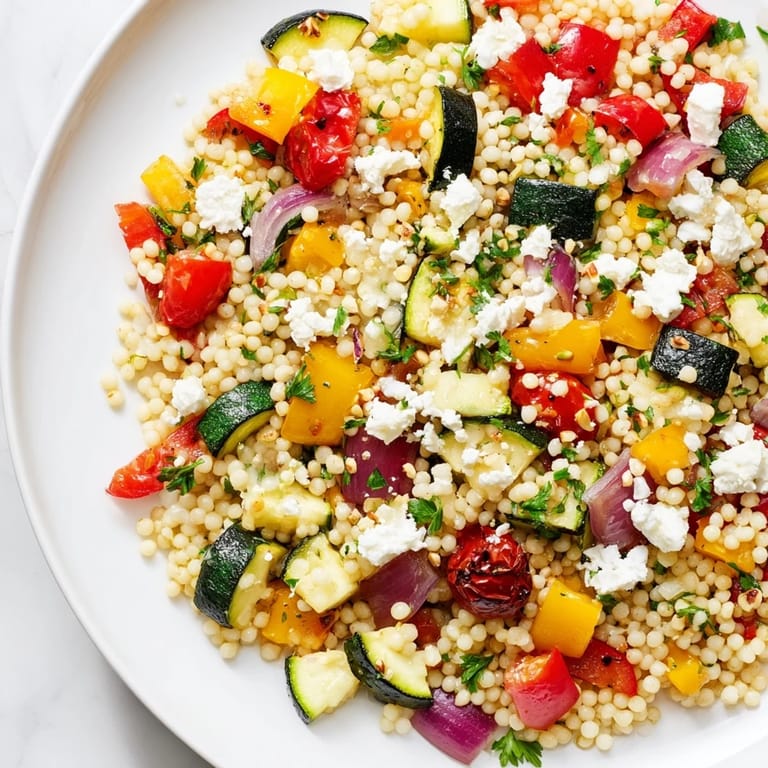
Save My neighbor showed up one August evening with a basket of vegetables from her garden, more than she could use before leaving for vacation. I had couscous in the pantry and a lemon on the counter, and what started as a practical way to avoid waste turned into something I now make on purpose. The roasted vegetables caramelize in the oven, their edges sweet and charred, while the couscous soaks up the bright lemon dressing like a sponge. It feels light but satisfying, the kind of dish that works whether you are feeding a crowd or just yourself on a quiet Tuesday.
I brought this to a potluck once, worried it might seem too simple next to the elaborate casseroles and layered dips. But people kept coming back for seconds, scraping the bowl clean and asking for the recipe. One friend told me she loved that it felt fancy without trying too hard, and I realized that sometimes the best dishes are the ones that do not announce themselves but just quietly deliver.
Ingredients
- Zucchini: Dicing it into even pieces helps it roast uniformly, so you get tender insides and golden edges all at once.
- Red and yellow bell peppers: The two colors are not just for looks, they add a slight sweetness that balances the acidity of the lemon.
- Red onion: Cut into wedges instead of slices so they hold their shape and develop a jammy texture in the oven.
- Cherry tomatoes: Halving them lets their juices concentrate and mingle with the other vegetables as they roast.
- Olive oil: Use a good one for roasting and an even better extra virgin for the dressing, since you will taste it clearly.
- Couscous: It cooks in five minutes off the heat, which feels like magic when you are hungry and impatient.
- Vegetable broth: This adds a subtle depth, but water works fine if that is what you have.
- Lemon: Both the juice and zest go into the dressing, so you get brightness and a hint of floral bitterness.
- Dijon mustard: A small spoonful emulsifies the dressing and adds a quiet sharpness.
- Garlic: Mince it finely so it distributes evenly and does not overpower the delicate lemon.
- Honey or maple syrup: Just enough to round out the acidity and make the dressing feel balanced.
- Fresh parsley: It adds a grassy freshness that keeps the dish from feeling heavy.
- Fresh mint: Optional, but it brings a coolness that plays beautifully with the roasted vegetables.
- Feta cheese: Crumbled on top, it adds a salty creaminess that soaks into the warm couscous.
- Toasted pine nuts or almonds: A little crunch and nuttiness that makes each bite more interesting.
Tired of Takeout? 🥡
Get 10 meals you can make faster than delivery arrives. Seriously.
One email. No spam. Unsubscribe anytime.
Instructions
- Preheat and prep your pan:
- Set your oven to 425 degrees and line a baking sheet with parchment so nothing sticks. This high heat is what gives the vegetables their caramelized edges.
- Toss and roast the vegetables:
- Coat the zucchini, peppers, onion, and tomatoes with olive oil, salt, and pepper, then spread them in a single layer. Stir them halfway through so they roast evenly and get golden in all the right places.
- Cook the couscous:
- Bring the broth to a boil, then stir in the couscous, olive oil, and salt before removing it from the heat. Cover and let it steam for five minutes, then fluff it with a fork to keep it light.
- Whisk the dressing:
- Combine lemon juice, zest, olive oil, Dijon, garlic, honey, salt, and pepper in a small bowl. Taste it and adjust if it needs more brightness or sweetness.
- Combine everything:
- In a large bowl, toss the couscous with the roasted vegetables, parsley, and mint, then pour the dressing over and mix gently. The warm couscous will absorb the dressing beautifully.
- Finish and serve:
- Scatter the feta and toasted nuts on top just before serving. This keeps the nuts crunchy and the cheese from melting too much.
 Save
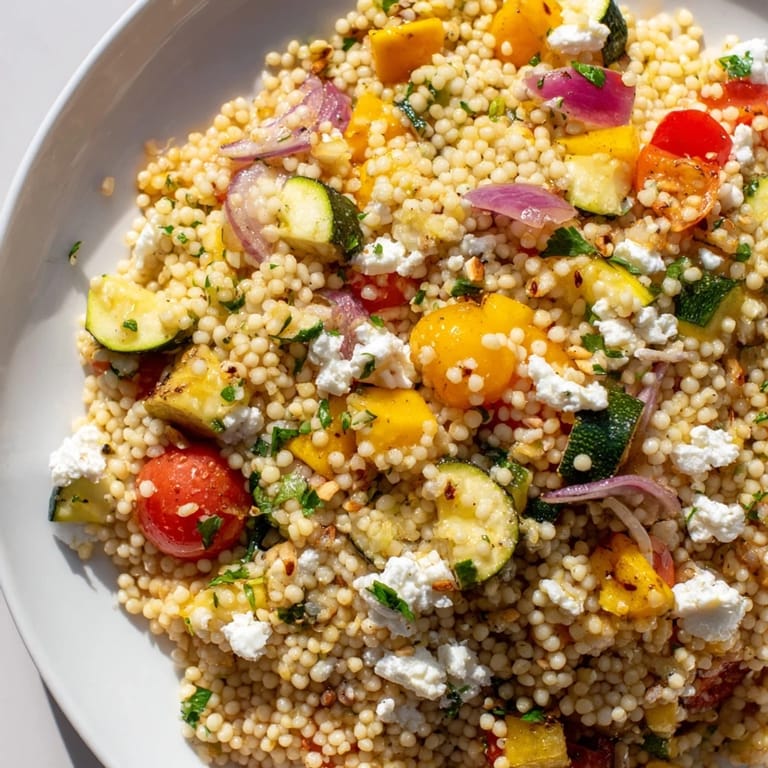
Save One summer I made this for a small dinner on the patio, and we ate it as the sun went down and the air cooled. Someone said it tasted like the kind of meal you would eat on vacation, somewhere by the sea, and I think that is because the lemon and herbs make everything feel a little bit lighter, a little bit brighter. It is the kind of dish that makes ordinary evenings feel special without any extra effort.
How to Store and Reheat
This salad keeps well in the fridge for up to two days, though the vegetables will soften a bit as they sit in the dressing. I usually store it in an airtight container and eat it cold straight from the fridge, but you can also let it come to room temperature for about twenty minutes if you prefer. If you are planning to make it ahead, wait to add the feta and nuts until just before serving so they stay fresh and crunchy.
Ways to Make It Your Own
This recipe is forgiving and adapts easily to whatever you have around. I have swapped in eggplant, asparagus, and even butternut squash depending on the season, and each version brought something different to the table. If you want more protein, toss in a can of drained chickpeas or some grilled halloumi, which gets delightfully squeaky and salty. You can also skip the feta and use a plant based cheese or just lean into the vegetables and herbs for a lighter, vegan friendly version.
Serving Suggestions
I have served this as a main dish for lunch and as a side next to grilled chicken or fish for dinner, and it works beautifully either way. It pairs well with a simple green salad or some crusty bread to soak up any leftover dressing at the bottom of the bowl. If you are bringing it to a gathering, double the recipe because it always goes faster than you expect.
- Serve it warm right after assembling, or let it cool to room temperature for a more relaxed feel.
- Pair it with grilled protein like chicken, shrimp, or lamb for a more substantial meal.
- Pack leftovers in a lunchbox with a squeeze of extra lemon to brighten it up again.
 Save
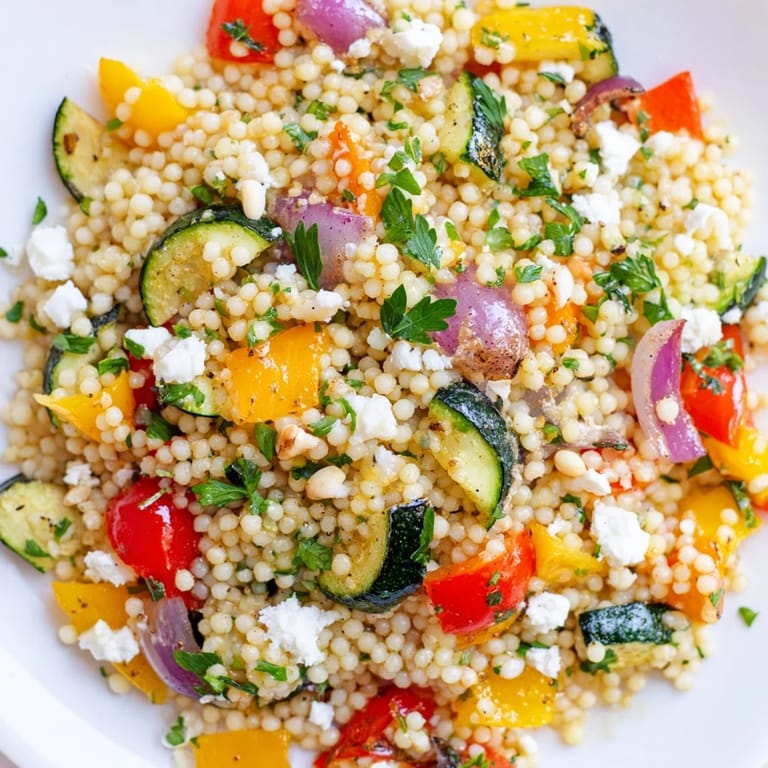
Save This dish has become one of those recipes I return to when I want something that feels nourishing without a lot of fuss. It reminds me that good food does not have to be complicated, just thoughtful and made with care.
Recipe FAQ
- → Can I make this salad ahead of time?
Yes, this salad is excellent for meal prep. Store leftovers in an airtight container in the refrigerator for up to 2 days. For best texture, keep the dressing separate and toss just before serving.
- → How can I make this vegan?
Simply omit the feta cheese or substitute it with a plant-based alternative like vegan feta or nutritional yeast. All other ingredients are naturally vegan-friendly.
- → What vegetables can I substitute?
Feel free to use seasonal vegetables like eggplant, asparagus, mushrooms, or Brussels sprouts. Roast heartier vegetables slightly longer if needed until tender and caramelized.
- → How do I add extra protein?
Mix in cooked chickpeas, grilled halloumi cheese, or serve alongside grilled chicken or fish. Toasted pine nuts and seeds also boost protein content.
- → Can I use a different grain instead of couscous?
Absolutely. Quinoa, bulgur, farro, or brown rice work beautifully. Adjust cooking times according to the grain's package directions before mixing with vegetables.
- → What's the best way to store leftovers?
Keep the salad in an airtight container refrigerated for up to 2 days. Store any remaining dressing separately to maintain the best texture when you reheat or serve.