 Save
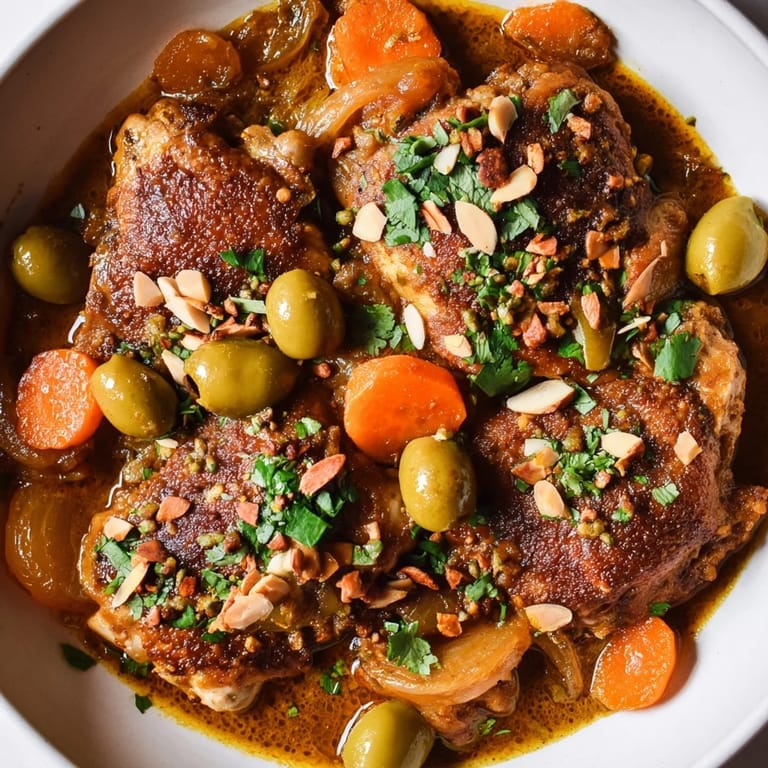
Save I stumbled into this dish on a rainy Tuesday when I had a bag of forgotten apricots in the pantry and chicken thighs that needed using. The scent of cinnamon and cumin browning in olive oil filled the kitchen so intensely my neighbor texted asking what I was making. I had no idea it would become the recipe I'd make whenever I needed to feel grounded. That first bite, sweet fruit against salty olive and tender chicken, taught me that balance isn't just a cooking principle, it's edible comfort.
The first time I served this to friends, I worried it might be too unfamiliar, too boldly spiced. Instead, someone scraped their bowl clean and asked if I'd been hiding a Moroccan grandmother somewhere. Another admitted they'd never liked chicken thighs until that night. We sat around the table long after the food was gone, talking and laughing, and I realized this dish had done more than feed us. It had created space for connection, for curiosity, for the kind of meal that turns into a memory.
Ingredients
- Bone-in, skin-on chicken thighs: The dark meat stays juicy through the long simmer, and the skin crisps beautifully when browned, adding rich flavor to the sauce.
- Onion and garlic: These form the aromatic base and soften into sweetness as they cook, melting into the background while supporting every other flavor.
- Fresh ginger: Grating it releases oils that bring warmth and a slight bite, balancing the sweetness of the fruit.
- Dried apricots: They plump as they simmer, releasing natural sugars that turn the sauce subtly sweet and glossy.
- Preserved lemon: This is the secret ingredient that adds a bright, fermented tang you can't replicate with fresh citrus, though it's optional if you can't find it.
- Green olives: Their briny sharpness cuts through the richness and keeps the dish from feeling too heavy.
- Spices (cumin, coriander, cinnamon, paprika, turmeric): Toasting them briefly in the pot wakes up their essential oils and creates layers of warmth that define Moroccan cooking.
- Chicken broth: It gently braises the chicken and becomes the silky base of the sauce, so use low sodium to control the salt.
- Diced tomatoes: Drained well, they add body and a hint of acidity without making the dish too wet.
- Toasted almonds: A crunchy garnish that adds texture and a nutty finish to each bite.
Tired of Takeout? 🥡
Get 10 meals you can make faster than delivery arrives. Seriously.
One email. No spam. Unsubscribe anytime.
Instructions
- Prep and brown the chicken:
- Pat the thighs completely dry so they sear instead of steam, then season them well with salt and pepper. Heat olive oil until it shimmers, then brown the chicken on all sides until the skin is golden and releases easily from the pan.
- Build the aromatic base:
- Remove the chicken and lower the heat, then add onion and carrot with a pinch of salt to help them soften. Stir in garlic, ginger, and all the spices, letting them bloom in the oil for about a minute until your kitchen smells like a spice market.
- Add tomatoes and deglaze:
- Stir in the drained tomatoes and scrape up all the browned bits stuck to the bottom of the pot. Those bits are pure flavor and will dissolve into the sauce.
- Simmer with fruit and broth:
- Nestle the chicken back in, then add apricots, preserved lemon if using, and chicken broth. Bring it to a gentle simmer, cover, and let it cook low and slow for 45 minutes, stirring occasionally so nothing sticks.
- Finish with olives:
- Uncover the pot, add the olives, and let everything simmer uncovered for 10 more minutes. The sauce will thicken and cling to the chicken beautifully.
- Taste and garnish:
- Adjust the salt if needed, then serve hot with a generous sprinkle of fresh cilantro and toasted almonds on top.
 Save
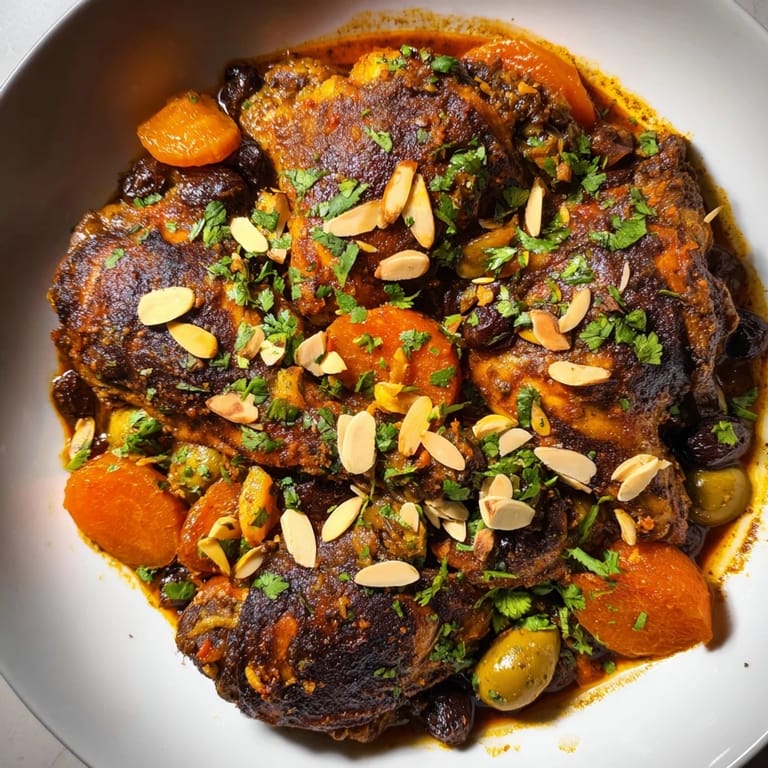
Save One winter evening, I made this for my sister who was going through a hard time. She sat quietly at the counter while I cooked, and when I set the bowl in front of her, she took a bite and her shoulders dropped. She said it tasted like being cared for. I think that's what a dish like this does, it carries intention, warmth, something that can't be measured but is always felt. Food like this isn't just nourishment, it's presence.
Serving Suggestions
I love spooning this over a mound of fluffy couscous, letting the sauce soak in and turn each grain golden. Rice works beautifully too, especially if you cook it with a cinnamon stick and a bay leaf. On nights when I want something more rustic, I tear warm flatbread and use it to scoop up the chicken and sauce, which feels more communal and a little more fun. However you serve it, make sure there's plenty of sauce, that's where all the magic lives.
Variations and Swaps
If you want to make this vegetarian, swap the chicken for two cans of drained chickpeas and add chunks of sweet potato or butternut squash. The timing stays mostly the same, just simmer until the vegetables are tender. I've also made this with lamb shoulder cubes, which turn meltingly soft and add a deeper, earthier flavor. For extra heat, stir in a spoonful of harissa paste along with the spices, it brings a smoky kick that pairs perfectly with the sweetness of the apricots.
Storage and Reheating
This dish stores like a dream and honestly tastes better the next day when the flavors have had time to settle and marry. Keep it in an airtight container in the fridge for up to four days, or freeze it for up to three months. Reheat gently on the stovetop with a splash of broth or water to loosen the sauce, stirring occasionally so nothing scorches.
- Let it cool completely before storing to avoid condensation that can make the sauce watery.
- Garnish with fresh cilantro and almonds only after reheating, not before storing.
- If freezing, leave out the olives and add them fresh when you reheat, they can get mushy in the freezer.
 Save
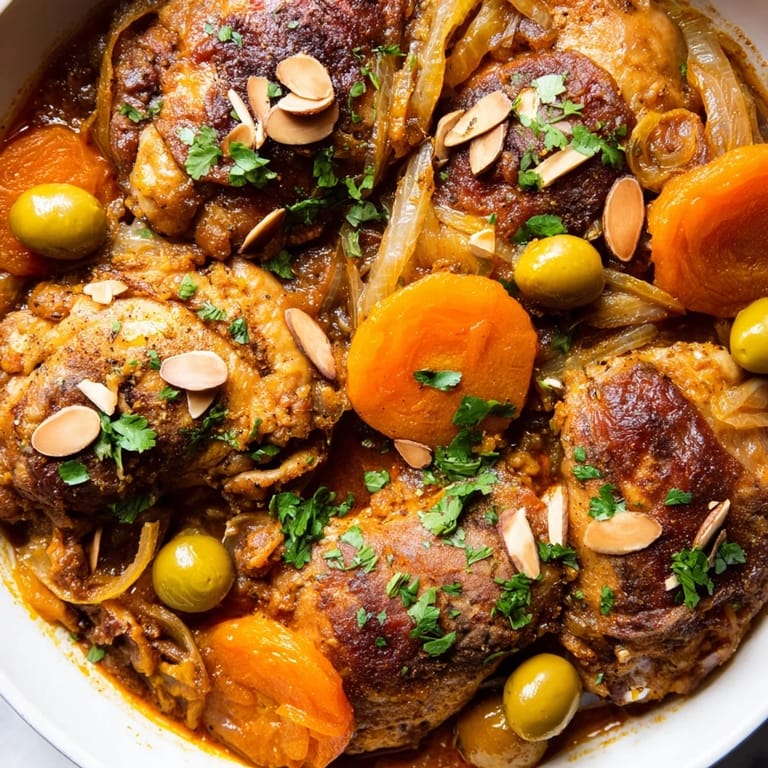
Save This is the kind of recipe that makes you feel like a better cook than you are, generous with flavor and forgiving in technique. I hope it fills your kitchen with warmth and your table with good conversation.
Recipe FAQ
- → What cut of chicken works best for this dish?
Bone-in, skin-on chicken thighs are preferred for their tenderness and rich flavor when slow-cooked.
- → Can I substitute apricots with another dried fruit?
Dried peaches or figs make good alternatives, offering a similar sweetness that complements the spices.
- → Is it necessary to use a tagine for cooking?
A large Dutch oven or heavy-bottomed pot can be used instead, providing even heat and moisture retention.
- → How do the olives affect the flavor profile?
Green olives add a salty, briny contrast that balances the sweetness of the apricots and spices.
- → What sides pair well with this North African dish?
Steamed couscous, fluffy rice, or warm flatbread perfectly absorb the flavorful sauce and complement the spices.