 Save
Save My first proper fish and chips wasn't at a fancy restaurant—it was wrapped in brown paper from a chippy near Southend, the grease soaking through as I walked back to the car with my dad. He'd insisted we do it right, none of the frozen stuff, and watching him unwrap that steaming package with such care made me understand it wasn't just food. It was ritual, tradition, the kind of meal that tastes like salt air and laughter. I spent years trying to recreate that moment in my own kitchen, and honestly, when you nail the double-fry and the batter crisps up just right, you get pretty close.
I made this for my partner on a rainy Tuesday when we were both exhausted from work, and somehow the smell of hot oil and golden batter frying filled the whole flat with something close to hope. We sat on the kitchen counter eating straight from the paper, vinegar dripping everywhere, and neither of us said much because we didn't need to. That's when I realized fish and chips isn't complicated because it needs to be—it's simple because it's meant to remind you that the best meals don't require perfection, just intention.
Ingredients
- White fish fillets (cod or haddock, 150g each): The backbone of everything—choose thick, firm fillets that won't fall apart when they hit the oil. I learned to pat them very dry before battering; any moisture will make the coating soggy rather than crispy.
- All-purpose flour and cornstarch: The cornstarch is the secret weapon here, it adds that extra crispness that regular flour alone can't deliver. The ratio matters more than you'd think.
- Baking powder: This is what creates those tiny air pockets in the batter that make it so impossibly light. Don't skip it or substitute it.
- Cold sparkling water (or beer): The cold is essential—warm liquid will make the batter heavy and dense. Beer adds a subtle depth if you're feeling adventurous, but sparkling water does the job beautifully.
- Russet or Maris Piper potatoes: These varieties have the right starch content to crisp up properly. Waxy potatoes won't give you that fluffy interior.
- Sea salt and malt vinegar: British fish and chips isn't British without these—the salt hits right after frying while the chips are hottest, and vinegar is non-negotiable, not optional.
- Sunflower or vegetable oil: You need a neutral oil with a high smoke point because you're frying at real temperatures here, not just sautéing.
Tired of Takeout? 🥡
Get 10 meals you can make faster than delivery arrives. Seriously.
One email. No spam. Unsubscribe anytime.
Instructions
- Soak Your Potatoes (The Foundation):
- Cut your potatoes into thick batons—thicker than you probably think—and let them sit in cold water for at least 15 minutes. This removes excess starch and makes them fluffier inside. I learned this the hard way after making dense, gluey chips that tasted more like potato paste than chips.
- First Fry at Lower Temperature (Building the Base):
- Heat your oil to 150°C (300°F) and fry the potatoes in batches for about 4–5 minutes until they're tender but still completely pale. They should look almost cooked but definitely not golden—this is about softening them, not crisping them. Remove them carefully and let them drain on paper towels until you're ready for the second fry.
- Mix Your Batter (Keep It Cold):
- Whisk together flour, cornstarch, baking powder, salt, and pepper in a large bowl. Gradually add the ice-cold sparkling water (or beer), whisking just until smooth and thick enough to coat the back of a spoon—thick enough that it clings to a finger without running off. If it's too thin, the batter will slide off the fish; too thick and it becomes heavy and doughy.
- Second Fry Your Chips (The Finish):
- Turn the heat up to 190°C (375°F) and fry those partially cooked chips again, this time for just 2–3 minutes until they're golden and crackling. This is where the magic happens—the outside crisps up shatteringly while the inside stays fluffy. Salt them immediately while they're still steaming.
- Fry the Fish (Quick and Careful):
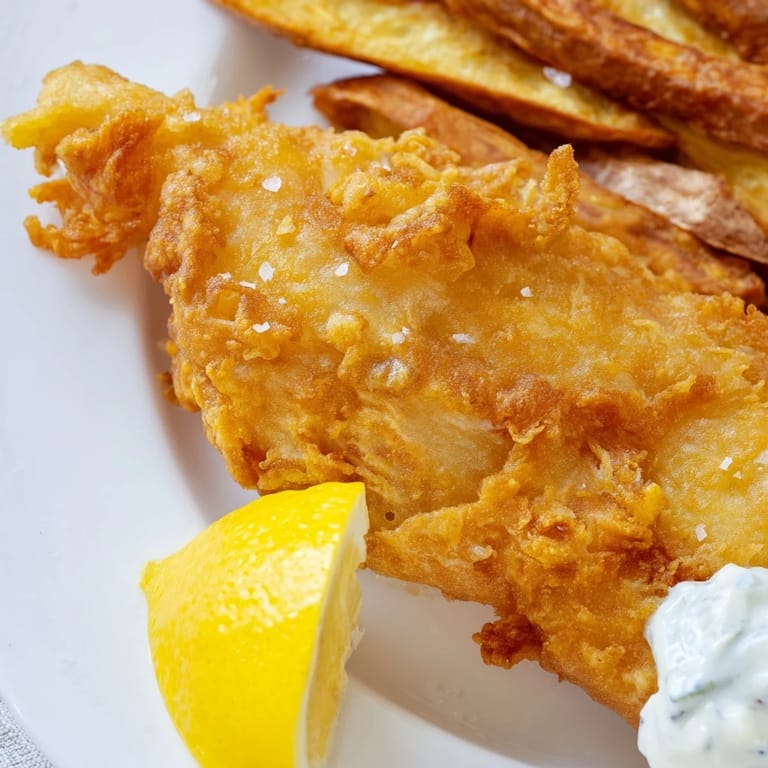
- Pat your fillets completely dry and dust lightly with flour before dipping into the batter. Lower them gently into the 190°C oil and fry for 5–7 minutes, turning once, until the coating is a deep golden brown and you can see it's set and crispy. Don't overcrowd the pan—the oil temperature will drop and you'll end up with greasy fish instead of crispy fish.
- Drain and Serve (Right Now):
- Place the hot fish on a wire rack or paper towels to drain the excess oil. Serve immediately with chips, a generous sprinkle of malt vinegar, and lemon wedges if you like a bit of brightness.
 Save
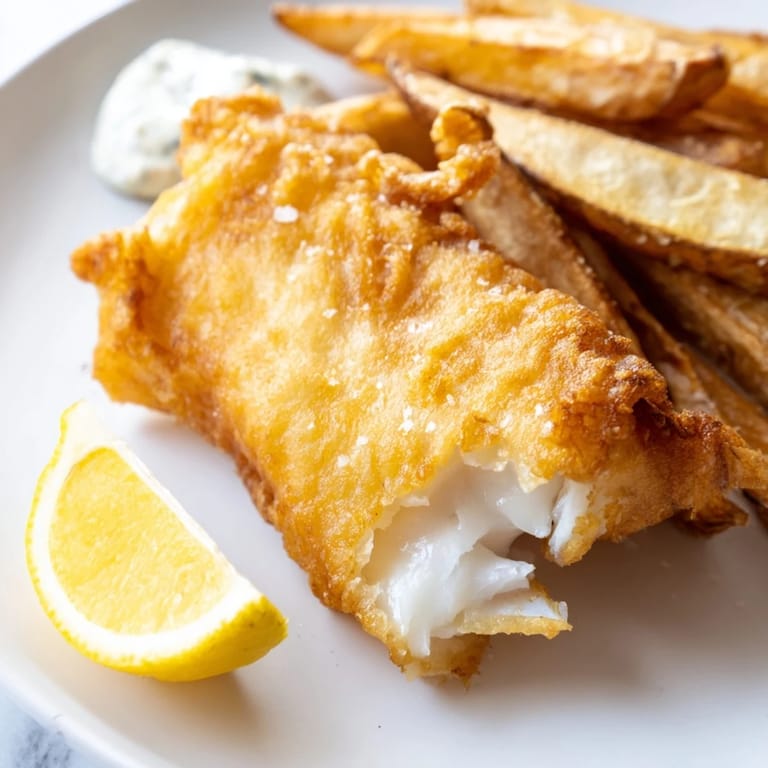
Save There's a moment when you pull that first batch of golden fish out of the oil and it's still popping and crackling, and you know you've done something right. That's when it stops being just a recipe and becomes the kind of meal you'll remember, the kind that tastes like home because you made it yourself.
The Oil Temperature Game
I spent two years making fish and chips without a thermometer, guessing based on how fast things browned and ending up with either undercooked interiors or burnt exteriors. A cheap kitchen thermometer changed everything. The oil needs to be 150°C for the first chip fry (low and gentle, softening the potato) and 190°C for the second fry and the fish (fast and fierce, creating that crispy exterior). There's a big difference between those temperatures, and your results depend on it.
Why the Batter Actually Matters
The batter isn't just coating—it's what separates good fish and chips from the kind that tastes like a soggy mistake. The cornstarch is the MVP here; it gives the batter an almost audible crispness that flour alone can't achieve. The baking powder creates tiny air pockets that make everything light and crispy rather than dense and heavy. Cold temperature keeps it from absorbing too much oil. Once you understand what each ingredient does, you stop following the recipe and start understanding it.
Making This Meal Your Own
Fish and chips is traditional, but tradition doesn't mean rigid. I've made it with beer batter when I had a bottle open, served it with mushy peas when I wanted something green on the plate, and drizzled it with hot sauce on nights when I felt like breaking the rules. The core stays the same—good fish, good potatoes, hot oil, salt—but the edges are flexible.
- Try beer instead of sparkling water for a deeper, more complex batter flavor.
- Mushy peas or thick tartar sauce turn this from a meal into a proper British experience.
- A squeeze of fresh lemon is sometimes better than vinegar, depending on your mood.
 Save
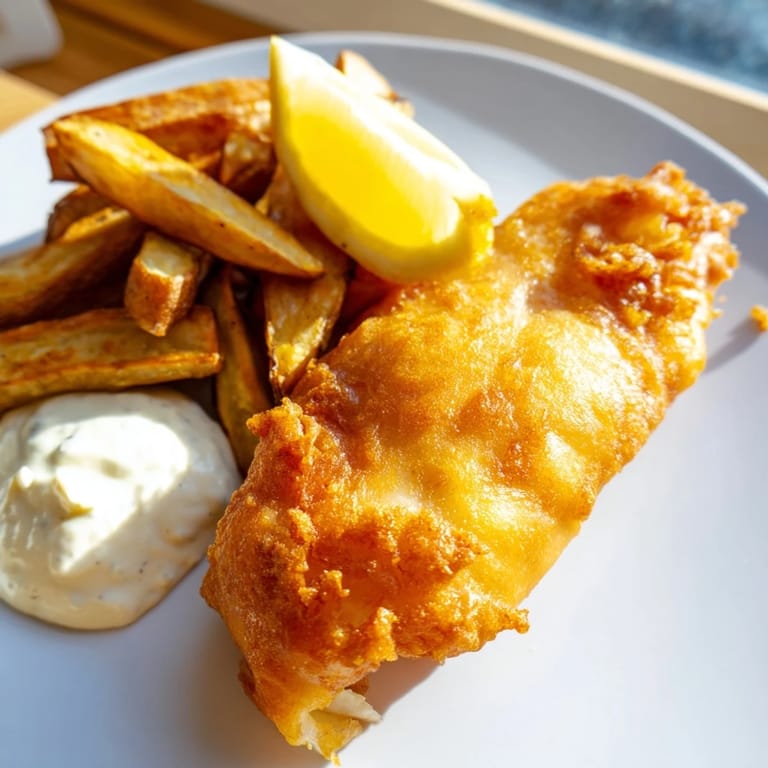
Save Fish and chips is one of those rare dishes that tastes exactly the way it should—simple, honest, and deeply satisfying. Make it once and you'll understand why it's been a British staple for over a century.
Recipe FAQ
- → What type of fish works best for this dish?
White fish like cod or haddock, skinless and boneless, are ideal for their flaky texture and mild flavor.
- → Why is the batter made with sparkling water or beer?
Sparking water or beer adds lightness and effervescence to the batter, creating a crispy, airy coating when fried.
- → What is the purpose of double-frying the chips?
Double-frying ensures the potatoes are cooked through and fluffy inside while achieving a crisp, golden exterior.
- → How should the fish be prepared before frying?
Pat the fillets dry and lightly dust with flour before dipping in batter to help the coating adhere and fry evenly.
- → What are recommended accompaniments for this dish?
Malt vinegar, lemon wedges, tartar sauce, and mushy peas complement the crispy fish and chips enhancing the traditional flavors.
- → Which oils are best for frying fish and chips?
Vegetable or sunflower oils are preferred for their high smoke points and neutral flavor suitable for deep frying.