 Save
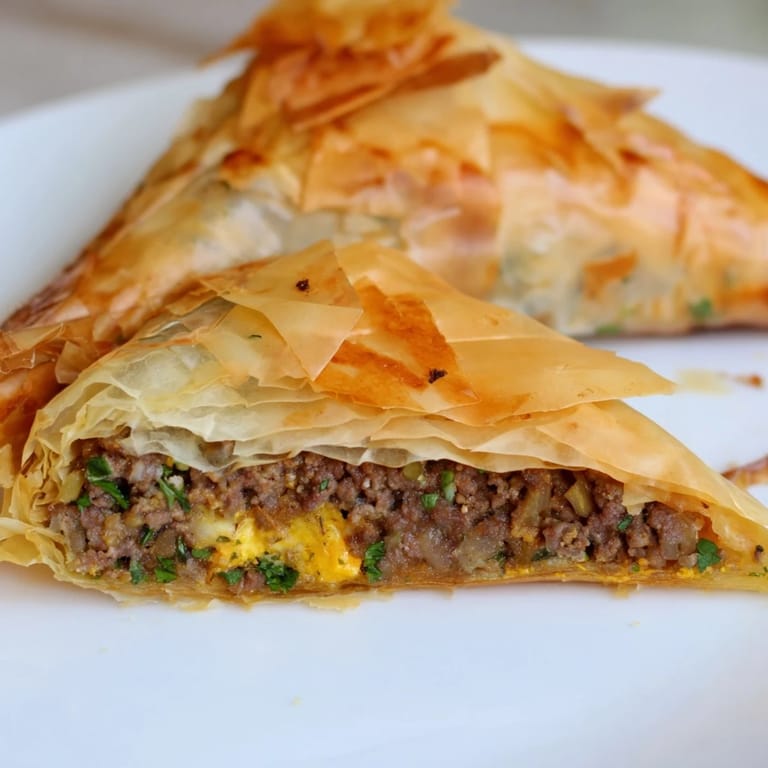
Save The first time I bit into a brik at a small café in Tunis, the crispy phyllo shattered between my teeth and suddenly there was this warm, runny yolk mixing with spiced meat and melted cheese. I was immediately hooked—it wasn't fancy or complicated, just pure comfort wrapped in golden pastry. Now whenever I make them at home, that same magic happens: the sizzle of hot oil, the aroma of cumin hitting the pan, and that moment when you slice into the pastry and the egg yolk spills out perfectly.
I remember making a batch of these for my sister's book club night, worried the phyllo would tear or the egg would overcook. Instead, they turned out so beautifully golden and everyone reached for seconds, asking if I'd learned to cook in North Africa. It was such a small moment, but that night solidified brik as my go-to impressive appetizer—it looks like you labored for hours when really you just managed a little heat and timing.
Ingredients
- Ground beef or lamb (120 g): The heart of the filling—lamb adds deeper, more authentic flavor, but beef works beautifully too and is often easier to find.
- Small onion, finely chopped: Minced small enough that it dissolves into the meat as it cooks, adding sweetness and moisture.
- Fresh parsley (1 tbsp): Stir this in at the very end so it stays bright and herbaceous rather than cooking down to nothing.
- Ground cumin (1 tsp): This is your aromatic anchor—don't skip it or reduce it, as it defines the whole dish.
- Ground coriander (1/2 tsp): A quieter spice that rounds out the cumin and adds a subtle warmth without announcing itself.
- Salt and black pepper: Season generously; the filling will taste a bit too strong on its own, but mellows perfectly once wrapped and fried.
- Phyllo pastry sheets (4 large): Handle with care—these sheets are delicate, and a little moisture (not wetness) from a damp kitchen works in your favor.
- Large eggs (4): Room temperature if possible, so the white sets quickly while the yolk stays gloriously runny.
- Gruyère or mozzarella cheese (4 tbsp grated, optional): A touch of cheese adds richness and helps bind the filling slightly, though traditional versions sometimes skip it entirely.
- Sunflower or vegetable oil for frying: You need enough to create a shallow bath—about 3–4 cm deep—so the pastry fries rather than absorbs.
Tired of Takeout? 🥡
Get 10 meals you can make faster than delivery arrives. Seriously.
One email. No spam. Unsubscribe anytime.
Instructions
- Sauté the aromatics and brown the meat:
- Warm a skillet over medium heat with just a splash of oil, then cook the chopped onion until it softens and turns translucent—this takes about 2–3 minutes and fills your kitchen with the most inviting smell. Add the ground meat, cumin, coriander, salt, and pepper, breaking it into small pieces as it browns, then fold in the parsley once everything is cooked through and the raw color is gone.
- Lay out and fill the phyllo:
- Place a phyllo sheet on a clean, dry surface (a damp countertop makes phyllo stick uncontrollably), then spoon 2–3 tablespoons of the cooled meat mixture into the center. The amount matters—too little and you have mostly pastry, too much and it tears or leaks.
- Crack the egg into the filling:
- Make a small well in the meat with the back of your spoon and gently crack the egg directly into it, keeping the yolk as intact as possible. If you want cheese, sprinkle a tablespoon over the yolk—it will melt into a creamy layer.
- Fold and seal the pastry:
- Fold the phyllo over the filling to form a triangle or rectangle, then wet your fingertip with a tiny bit of water and run it along the seams to seal them shut. This keeps the egg from leaking and the pastry from unraveling.
- Heat the oil and fry:
- Pour oil into a large frying pan to a depth of about 3–4 cm and heat it over medium-high until a small piece of phyllo sizzles immediately when dropped in. Carefully slide each brik into the hot oil and fry for 2–3 minutes per side until the pastry is golden and crisp, listening for that steady sizzle that tells you it's cooking properly.
- Drain and serve right away:
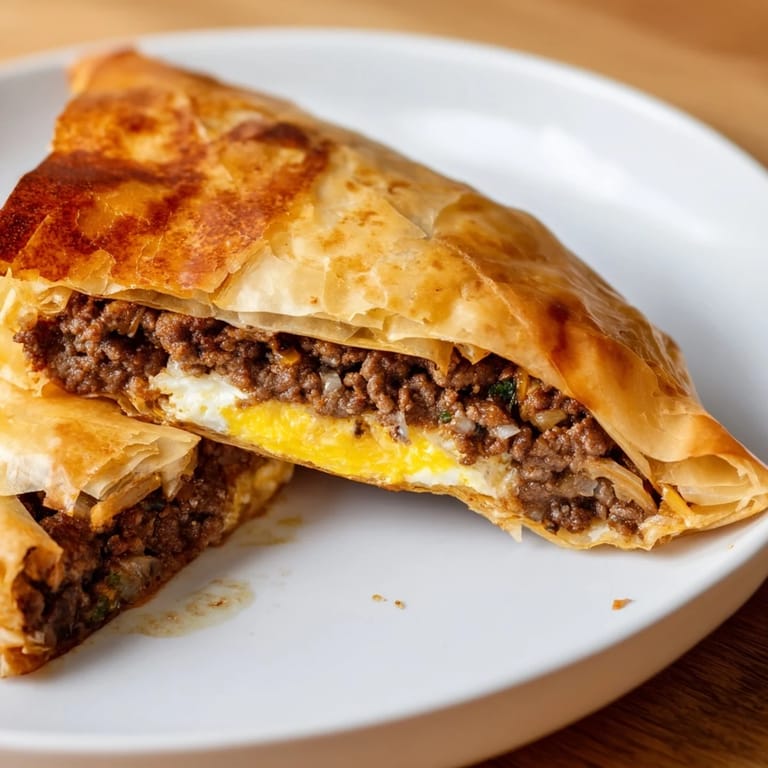
- Use a slotted spoon to lift each brik onto paper towels, where the excess oil drains off in seconds. Serve immediately while the pastry is still shattering under your teeth and the yolk is warm enough to ooze.
 Save
Save There's something almost ceremonial about eating a brik—you have to hold it carefully so the yolk doesn't escape, and there's always that perfect moment when you bite through the crispy shell and everything soft tumbles out. It's one of those dishes that makes you slow down and actually taste what's in front of you, rather than just eating.
The Secret to Perfect Phyllo
Phyllo seems intimidating, but it's actually forgiving once you understand what it wants. These sheets are so thin they tear if you breathe on them too hard, but that same delicacy means they crisp up beautifully in hot oil with almost no effort. The real trick is respecting that they don't like moisture before frying—a dry countertop and quick, confident handling will save you every time. If your phyllo package has been open for a while, cover the unused sheets with a slightly damp (not wet) towel to keep them pliable without making them sticky.
Why the Egg Yolk Matters
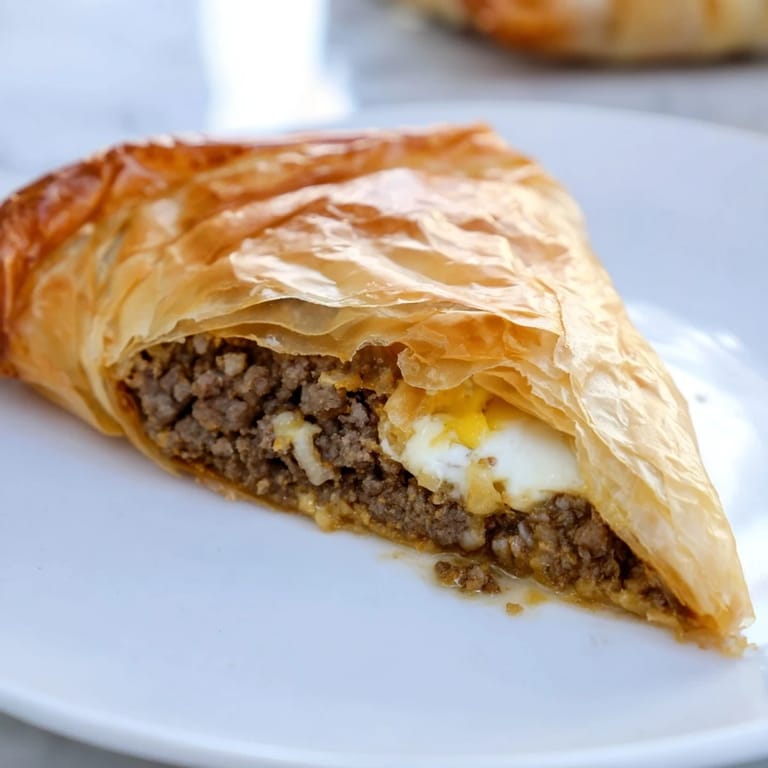
The runny yolk isn't just for indulgence; it's essential to the dish's architecture. As it cooks, it creates a creamy sauce that brings together the spiced meat, cheese, and pastry into one cohesive bite. If your yolk cooks solid, you lose that binding magic and the brik becomes just crispy pastry with filling inside rather than everything melting together. The trick is hot oil and quick frying—the outside seals fast while the inside stays just warm enough for the yolk to stay soft.
Making Them Your Own
Once you've mastered the basic brik, the filling becomes your playground. Some nights I add a pinch of harissa to the meat for heat, other times I swap in flaked tuna or even a spiced potato mixture for a vegetarian version. The technique stays the same, but the flavor shifts completely. Serve each brik with lemon wedges squeezed over just before eating, and a simple green salad alongside to cut through the richness.
- Harissa adds a serious kick and brings the dish closer to street food authenticity.
- A squeeze of fresh lemon right before eating brightens every bite and prevents the richness from feeling heavy.
- These can be assembled ahead and fried fresh just before serving, though the pastry stays crispest if fried immediately after filling.
 Save
Save There's a reason brik has survived for centuries in Tunisian cuisine—it's simple, satisfying, and every element serves a purpose. Make these once and you'll understand why they're a beloved street food, and probably find yourself making them again and again.
Recipe FAQ
- → What type of meat works best for this dish?
Ground beef or lamb are commonly used to provide a rich and savory base for the filling, complementing the spices and parsley.
- → Can I substitute the phyllo pastry with something else?
Phyllo pastry is preferred for its delicate, crispy texture, though similar thin dough sheets may be used carefully to achieve a comparable result.
- → How do I prevent the phyllo from tearing during assembly?
Handle phyllo sheets gently, stacking two layers if very thin, and use a light touch when folding and sealing with water to avoid tears.
- → Is cheese a traditional ingredient in this preparation?
Cheese such as Gruyère or mozzarella is optional and adds a creamy note, though some traditional versions omit it entirely.
- → What is the best oil for frying this pastry?
Sunflower or vegetable oil works well due to their neutral flavor and suitable smoke points for frying the pastry to golden crispness.
- → Can this preparation be customized with different fillings?
Yes, variations include using tuna or potato fillings instead of meat, or adding spices like harissa for extra flavor.