 Save
Save The first time I made this stir-fry was on a Tuesday evening when I'd convinced myself I had nothing decent in the kitchen—just a block of tofu, some wilting vegetables, and a craving for something warm and filling. I ended up tossing everything together with a ginger-sesame sauce I'd thrown together on instinct, and something magical happened the moment those noodles hit the pan. My partner walked in mid-cook and the aroma alone convinced them to stay for dinner instead of heading back out. That simple bowl taught me that the best meals often come from working with what you have rather than waiting for the perfect ingredients.
I've made this dish probably thirty times now, and each time someone asks for the recipe, I realize it's become my go-to dinner party answer—quick enough to whip up on a Tuesday, impressive enough that guests never suspect it took under forty minutes. There was this one Sunday when I made it for my sister during a surprise visit, and she was so genuinely delighted that she tried to recreate it at home the next week, only to text me in frustration that hers didn't taste the same. Turns out she'd skipped the ginger and used regular oil instead of sesame—a reminder that these small choices really do matter.
Ingredients
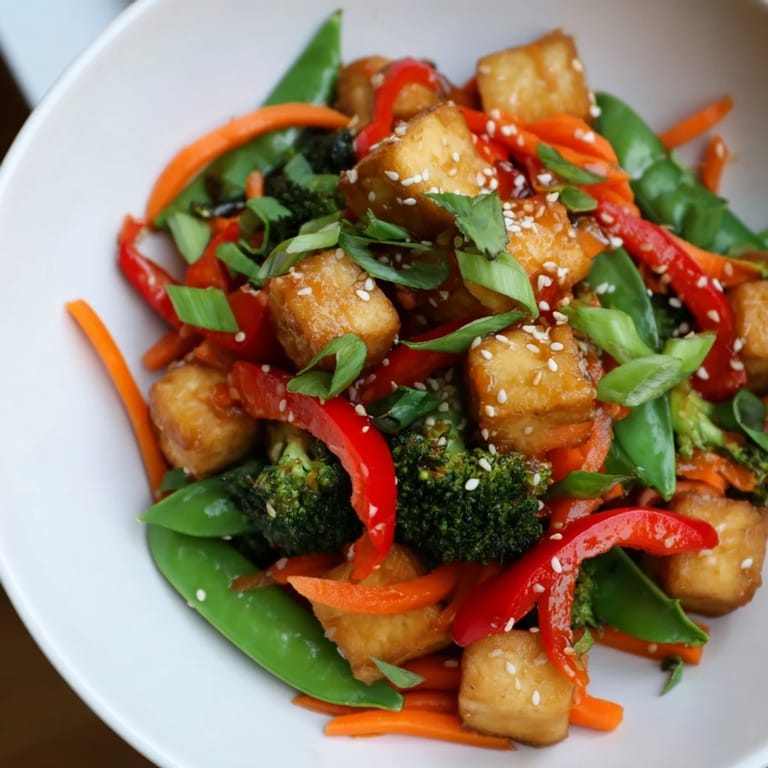
- Firm tofu (400 g), drained and pressed: Press it well or it won't crisp up properly; pat it with paper towels and let it sit while you prep everything else.
- Cornstarch (1 tbsp): This is your secret to that restaurant-quality crispness; don't skip it or substitute.
- Vegetable oil (2 tbsp, plus more as needed): Use something neutral and high-heat—peanut oil works beautifully if you have it.
- Red bell pepper, thinly sliced: The sweetness balances the umami in the sauce; any color works, but red is prettier and slightly sweeter.
- Carrot, julienned: Cut it thin so it stays crisp and doesn't overpower the other vegetables.
- Sugar snap peas (100 g): These keep their crunch and add a delicate sweetness that plays well with ginger.
- Broccoli florets (100 g): Small florets cook faster and distribute better throughout the dish.
- Spring onions, sliced: Save these for garnish; they're fresher that way.
- Dried wheat or rice noodles (250 g): Rice noodles give a lighter feel; wheat noodles are heartier and chewier.
- Soy sauce (3 tbsp): The backbone of the sauce; don't go too cheap here.
- Toasted sesame oil (1 tbsp): Use just enough—it's potent and transforms the whole thing with its nutty warmth.
- Rice vinegar (2 tbsp): This cuts through richness and keeps everything bright.
- Honey or maple syrup (1 tbsp): A touch of sweetness rounds out the flavors; maple syrup makes it slightly earthier.
- Fresh ginger, grated (2 tbsp): Peel it with the edge of a spoon and grate it finely; frozen ginger works in a pinch but fresh is worth it.
- Garlic, minced (2 cloves): Mince it by hand or use a microplane so it distributes evenly in the sauce.
- Sesame seeds: Toast your own if you can; they taste completely different from raw.
Tired of Takeout? 🥡
Get 10 meals you can make faster than delivery arrives. Seriously.
One email. No spam. Unsubscribe anytime.
Instructions
- Set your foundation:
- Cook the noodles exactly to package instructions, then drain and rinse under cold water until they're completely cool—this stops the cooking and keeps them from clumping together later.
- Prepare your tofu for crispiness:
- Cut the tofu into bite-sized cubes and toss each piece with cornstarch as if you're dusting them lightly; this coating is what gives you that golden exterior.
- Get the tofu golden:
- Heat your oil in the wok over medium-high heat until it shimmers and moves like water around the pan, then add the tofu and let it sit for a minute or two before stirring—don't fuss with it, let the heat do the work.
- Work through the vegetables:
- Add all your vegetables to the same pan and keep everything moving with a wooden spoon or spatula, tasting as you go; you want them tender but still with a slight snap when you bite them.
- Mix your magic sauce:
- While the vegetables are cooking, whisk your soy sauce, sesame oil, rice vinegar, honey, ginger, garlic, and sesame seeds together in a small bowl until the honey dissolves.
- Bring it all together:
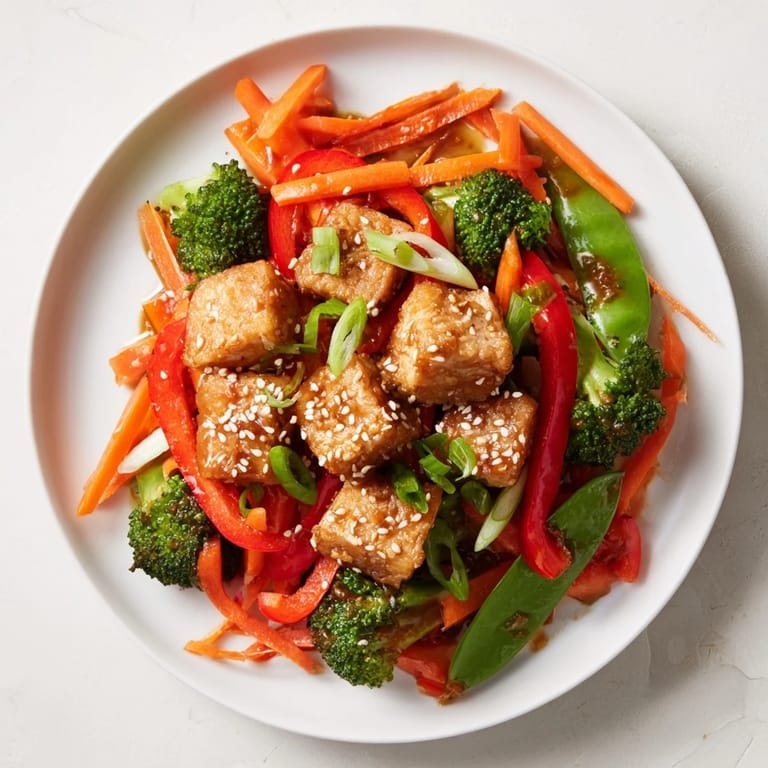
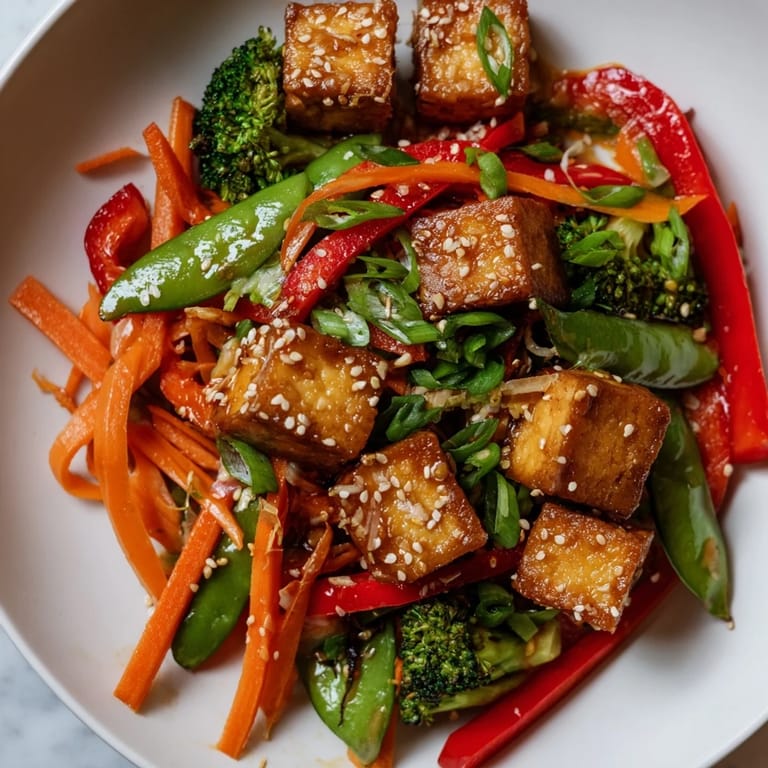
- Return the tofu to the pan with the vegetables, add your cooked noodles, pour in the sauce, and toss gently for a couple of minutes until everything is warm and glossy with sauce.
- Finish with flourish:
- Scatter spring onions, extra sesame seeds, and cilantro over the top, and serve with lime wedges on the side for squeezing over.
 Save
Save I remember the moment I realized this dish had become part of my regular rotation: my partner was asking for it by name before I'd even finished cooking, and there was something deeply satisfying about that—having created something simple enough to make on impulse but flavorful enough to feel like an occasion. These noodles stopped being just dinner and started being a small daily luxury.
Why This Works
The beauty of this stir-fry is in how the components balance each other—the earthiness of tofu, the brightness of ginger and rice vinegar, the umami depth of soy sauce, and the nuttiness of sesame oil all meet in the middle and create something that feels complete without being heavy. I've learned that when your sauce has enough personality, almost any vegetable combination works, which is why this dish has stayed in regular rotation even as my vegetable preferences have shifted with the seasons.
Building Layers of Flavor
One thing I discovered through making this repeatedly is that toasting your sesame seeds in a dry pan for thirty seconds before using them changes everything—suddenly they're fragrant and nutty instead of bland and flat. Similarly, if you can find actual toasted sesame oil instead of regular sesame oil, it's absolutely worth seeking out; the difference is like comparing fresh cilantro to dried cilantro.
Variations and Flexibility
This recipe is genuinely adaptable, which is part of why it's lived in my kitchen for so long. I've made it with mushrooms instead of broccoli when I had them on hand, swapped in bok choy when I wanted something leafier, and added a pinch of chili flakes when I was in the mood for heat. The framework stays the same—crispy tofu, quick vegetables, noodles, and that unforgettable sauce—but the details shift depending on what's in your crisper drawer or what you're craving.
- For gluten-free, swap soy sauce for tamari and use rice noodles without hesitation.
- Add sriracha or chili flakes to the sauce if you like things spicy; start small and taste as you go.
- Mushrooms, baby corn, and snap peas can all rotate in and out depending on the season and what looks fresh.
 Save
Save This dish has become my answer to "what's for dinner" more times than I can count, and every bowl feels like a small kindness to myself—warm, flavorful, and ready in the time it takes to watch a couple of songs. It's one of those recipes that gets better the more you make it, not because the technique changes, but because you learn what your specific preferences are and adjust accordingly.
Recipe FAQ
- → What type of tofu works best for stir-fry?
Firm tofu is ideal as it holds its shape and crisps well when coated with cornstarch and pan-fried.
- → Can I use different noodles in this dish?
Yes, wheat or rice noodles both work well depending on preference or dietary needs.
- → How do I make the sauce more spicy?
Add chili flakes or a dash of sriracha to the sauce mixture for a spicy kick.
- → Are there good vegetable substitutes for this stir-fry?
Mushrooms, baby corn, or bok choy can be added or substituted depending on what’s available.
- → How to keep the tofu crispy in the stir-fry?
Press tofu well to remove moisture, toss with cornstarch, and fry in hot oil until golden on all sides.