 Save
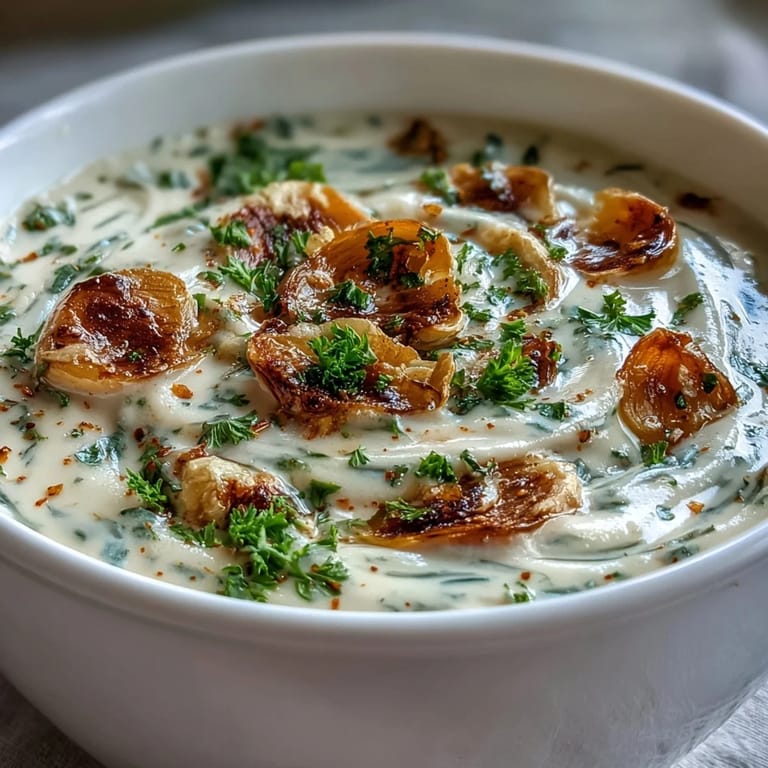
Save There's something almost magical about the transformation that happens when you roast garlic—those pungent cloves mellow into something sweet and creamy, almost nutty. I discovered this soup on a gray November afternoon when my neighbor stopped by with a basket of garlic from her garden, and I had no idea what to do with four enormous heads. She laughed at my hesitation and said, "Just roast them," so I did, and the smell that filled my kitchen changed everything. Now whenever the first real cold snap hits, I find myself craving this velvety bowl of comfort.
I made this for my sister during her first week working from home, when she called complaining about the rain and her aching joints. She showed up at my door in borrowed slippers, and I had this soup warming on the stove—the kind of quiet gesture that said I'd been thinking about her. She ate two bowls in silence, then asked for the recipe. That's when I knew it had become something I'd make again and again.
Ingredients
- Roasted Garlic (4 large heads): This is the star, so don't skip it or substitute—roasting transforms the flavor into something completely different from raw garlic, almost creamy and sweet.
- Olive Oil (2 tablespoons): Use something you actually enjoy, since it's one of the few fats here and it coats the garlic beautifully as it roasts.
- Unsalted Butter (2 tablespoons): This creates the base for sautéing your aromatics and adds a subtle richness that plant-based butter can replace if needed.
- Yellow Onion (1 medium, finely chopped): Finely chopped means it will practically disappear into the soup and sweeten naturally as it cooks.
- Russet Potato (1 large, peeled and diced): The potato is what makes this velvety—it dissolves into the blender and creates that luxurious texture without any cream.
- Low-Sodium Vegetable Broth (4 cups): Low-sodium lets you control the salt level yourself, and it means the roasted garlic flavor stays front and center.
- Whole Milk or Plant-Based Milk (1 cup): Added at the end, this smooths everything out and adds richness; if you use unsweetened plant-based, the garlic flavor will sing through.
- Dried Thyme (1/2 teaspoon): Thyme is the quiet friend here—it supports the garlic without competing with it.
- Bay Leaf (1): This gets removed before blending, but it whispers subtle complexity into the whole pot while everything simmers.
- Salt and Black Pepper (to taste): Add these after blending so you can taste as you go—you'll need less than you think because the roasted garlic already brings so much flavor.
- Fresh Parsley (2 tablespoons, chopped): The bright green finish cuts through the richness and gives you a small moment of freshness in each spoonful.
- Croutons or Toasted Bread (optional): I skip these most of the time, but sometimes I'll tear up a piece of sourdough and toast it in the oven just for the contrast.
Tired of Takeout? 🥡
Get 10 meals you can make faster than delivery arrives. Seriously.
One email. No spam. Unsubscribe anytime.
Instructions
- Set up your garlic for roasting:
- Preheat your oven to 400°F and slice the tops off each garlic head—just the papery top, enough to expose the cloves inside. Drizzle generously with olive oil, wrap each head loosely in foil, and place on a baking sheet.
- Roast until golden and soft:
- Roast for 35 to 40 minutes, depending on your oven. You'll know it's ready when the cloves feel completely soft when you press them gently and they smell sweet and caramelized rather than sharp. Let them cool just enough to handle.
- Build your soup base:
- While the garlic roasts, melt butter in a large pot over medium heat and add your finely chopped onion. Sauté for about 5 minutes until the onion turns translucent and smells sweet—this is when you know you're building something good.
- Add the rest and simmer:
- Squeeze the roasted garlic cloves out of their skins directly into the pot, add your diced potato, thyme, bay leaf, and broth. Bring it all to a boil, then lower the heat and let it simmer gently for about 15 minutes until the potato is tender enough to break easily with a spoon.
- Blend until silky:
- Remove the bay leaf, then use an immersion blender right in the pot to purée everything until completely smooth—this should take about 2 minutes of steady blending. If you prefer, you can work in batches with a regular blender, but the immersion blender is less intimidating.
- Finish with milk and seasoning:
- Return everything to the pot if you used a blender, then pour in your milk and stir gently over low heat until the soup is warmed through. Taste it, then add salt and pepper slowly—you'll probably need less than you expect since the roasted garlic is already rich.
- Serve with intention:
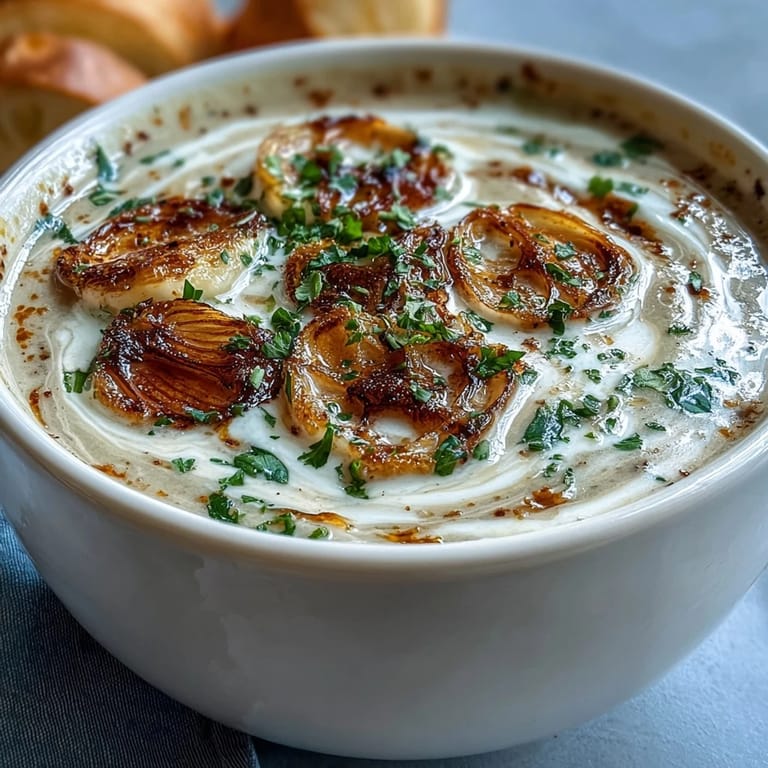
- Ladle into bowls and scatter fresh parsley over the top. If you want croutons, add them just before serving so they stay crispy.
 Save
Save There was an evening when I made this soup for a small group of friends who'd all been going through rough patches, and nobody talked much at first—they just ate. By the second bowl, conversations started flowing again, the kind where people felt safe enough to be honest. I realized then that this soup had become more than sustenance for me; it was a way of saying I see you, I care that you're warm.
The Magic of Roasted Garlic
Roasting garlic is one of those kitchen techniques that feels like a small miracle every single time. The heat mellows the sulfur compounds that make raw garlic sharp and peppery, replacing them with natural sugars that caramelize and turn sweet. Once you understand this happens, you'll start roasting garlic just to eat cloves straight from the skin on a piece of toast—it becomes its own reward.
Making It Your Own
This soup is forgiving enough to play with based on what's in your kitchen or what you're craving. I've added a pinch of cayenne on mornings when I wanted heat, stirred in a spoonful of pesto at the very end, or even added a handful of spinach during the final simmer. The roasted garlic is so dominant that it welcomes these small variations without losing its essential character.
Storage and Make-Ahead Strategy
This soup keeps beautifully in the refrigerator for up to four days, and honestly, it tastes even better the next day after the flavors have had time to settle and meld together. You can also roast your garlic heads days in advance and store them in the fridge, which means on a busy evening you're really just sautéing an onion and simmering everything together.
- Freeze leftovers in portions for those moments when you need comfort but don't have time to cook.
- If you freeze it, leave out the milk and add it fresh when you reheat, which keeps the texture silkier.
- This makes an impressive dish to bring to someone going through a difficult time, since it arrives as an actual meal they can heat and enjoy immediately.
 Save
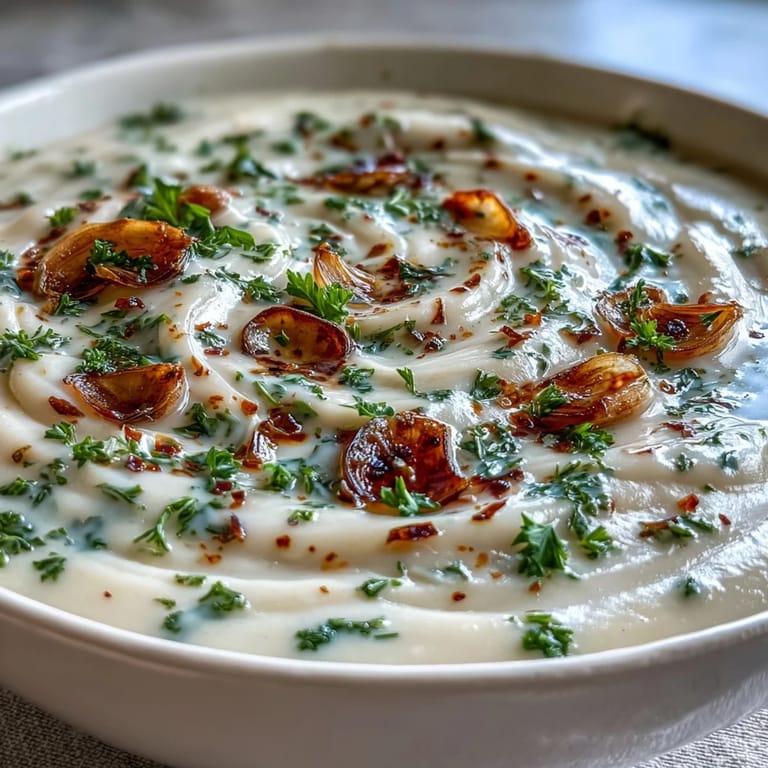
Save This soup has become my answer to almost any day that feels cold or complicated—it requires just your attention and a little patience, and it rewards you with something that tastes far more involved than it actually is. That's the kind of recipe worth keeping close.
Recipe FAQ
- → Why roast the garlic instead of using fresh?
Roasting transforms garlic's pungent sharpness into a sweet, mellow flavor with a caramelized depth. The cloves become soft and buttery, blending seamlessly into the soup while imparting a delicate sweetness that fresh garlic cannot achieve.
- → Can I make this soup vegan?
Absolutely. Simply replace the unsalted butter with plant-based butter or olive oil, and use your favorite unsweetened plant-based milk instead of dairy milk. The soup remains just as creamy and satisfying.
- → How long does roasted garlic soup keep?
Store cooled soup in an airtight container in the refrigerator for up to 4 days. The flavors actually deepen and improve after a day. Reheat gently over medium-low heat, stirring occasionally. You can also freeze it for up to 3 months.
- → What's the purpose of the potato?
The potato acts as a natural thickener, adding body and creaminess without using heavy cream. As it simmers and breaks down, it starches the broth slightly, creating that velvety texture while remaining neutral in flavor.
- → Can I use a regular blender instead of an immersion blender?
Yes, though work in batches and never fill more than halfway. Hot soup expands when blended, so remove the center cap from the lid and cover with a kitchen towel to allow steam to escape safely.
- → What should I serve with roasted garlic soup?
Crusty bread, toasted baguette slices, or homemade croutons complement the creamy texture perfectly. A simple green salad with vinaigrette balances the richness. For something more substantial, pair with a grilled cheese sandwich.