 Save
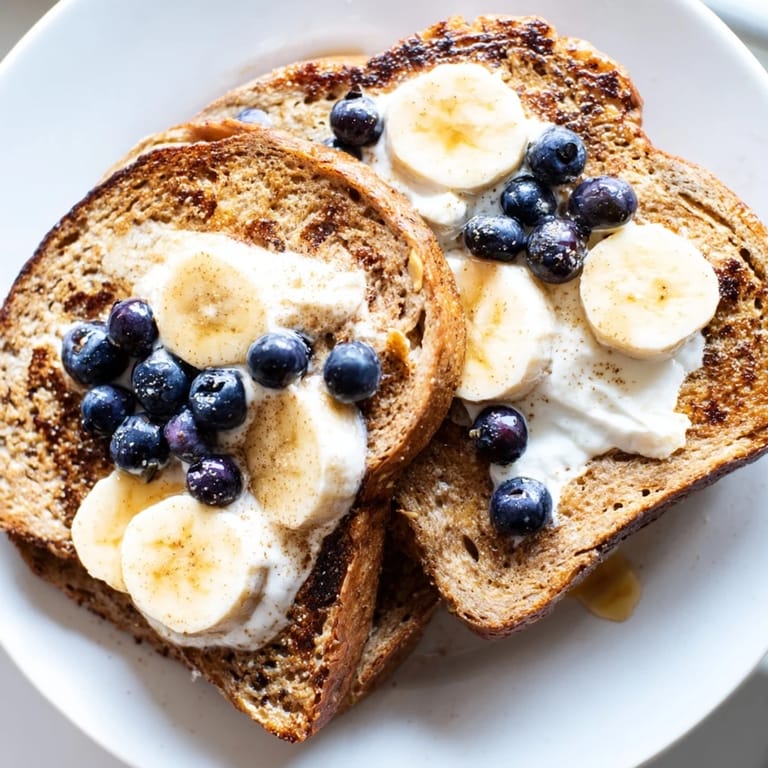
Save There's something about the smell of butter hitting a hot skillet that makes everything feel possible at 7 a.m. I stumbled onto this version of French toast one morning when I was determined to actually eat protein for breakfast instead of just loading up on carbs and hoping for energy until lunch. The trick was adding Greek yogurt to the custard—it creates this impossibly thick, custardy center that feels almost indulgent while keeping you full for hours. Now I make it at least twice a week, and it's become the kind of breakfast that doesn't feel like a compromise.
I remember making this for a friend who'd just started going to the gym and was convinced all healthy breakfast food tasted like cardboard. Watching her take that first bite and immediately ask for seconds felt like a small victory. She's been asking me for the recipe ever since, but I think she just likes having an excuse to come over and smell the butter.
Ingredients
- 8 slices whole grain or brioche bread: Slightly stale bread is your secret weapon—it absorbs the custard without falling apart. Fresh bread will get soggy, so leave yours out overnight if you can.
- 4 large eggs: The foundation of any good French toast; they're what create that custardy texture everyone's chasing.
- 1 cup milk (dairy or unsweetened almond milk): This thins out the mixture just enough so it coats the bread evenly without being runny.
- 1/2 cup Greek yogurt or cottage cheese: This is the game-changer—it adds protein, richness, and makes the custard extra thick and luscious.
- 1 scoop vanilla or unflavored protein powder: Pick whatever you like; vanilla blends seamlessly, but unflavored keeps the focus on the cinnamon and maple.
- 1 tbsp maple syrup or honey: Just enough sweetness to make it feel like breakfast, not health food that tastes like punishment.
- 1 tsp vanilla extract: A small pour that makes the whole thing smell like a bakery.
- 1/2 tsp ground cinnamon: Warm, familiar, and it pairs perfectly with butter and maple.
- Pinch of salt: Balances everything and makes the sweet flavors pop.
- 1 tbsp unsalted butter or coconut oil: Butter gives you that golden crust and incredible flavor; coconut oil works if that's your preference.
Tired of Takeout? 🥡
Get 10 meals you can make faster than delivery arrives. Seriously.
One email. No spam. Unsubscribe anytime.
Instructions
- Mix the custard:
- Whisk the eggs, milk, yogurt, protein powder, maple syrup, vanilla, cinnamon, and salt in a bowl until smooth and no clumps of protein powder remain. This is the backbone of everything, so take a moment to make sure it's properly combined.
- Heat your skillet:
- Set a large nonstick skillet or griddle over medium heat and let it get hot for a minute or two—you want that butter to sizzle immediately when it hits the pan. Add half your butter and let it foam up.
- Dip and soak:
- Take each slice of bread and dip it into the custard for about 10–15 seconds per side—you want it soaked through but not falling apart. This is where slightly stale bread really matters.
- Cook until golden:
- Place the soaked bread on the hot skillet and cook for 2–3 minutes per side until the outside is deep golden brown and the inside feels custardy when you press it gently. Add more butter as needed so each batch has enough to crisp up properly.
- Serve right away:
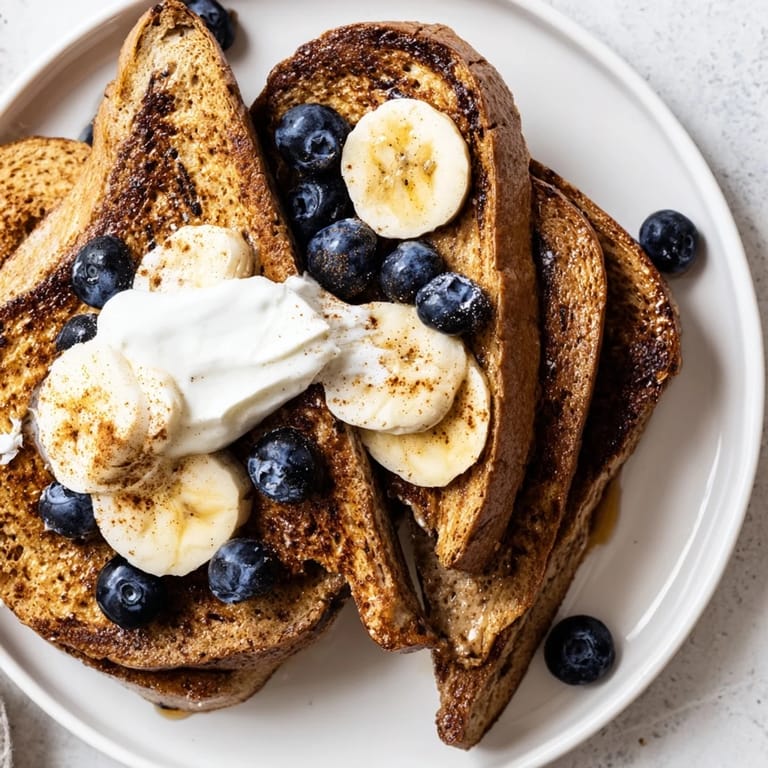
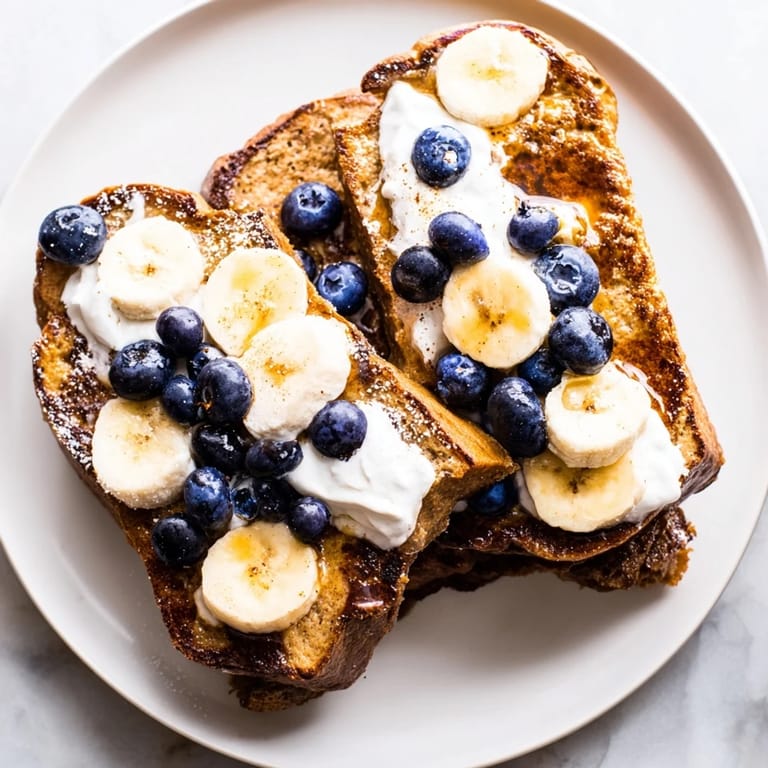
- French toast is best the moment it comes off the heat, while the inside is still custardy and the outside is still crispy. Top with berries, banana slices, a dollop of yogurt, or more maple syrup.
 Save
Save There's a quiet morning moment I've come to treasure with this breakfast—that moment when you're standing at the stove, spatula in hand, watching the bread turn golden and smell incredible while the kitchen gets warm and butter-scented. It reminds me that breakfast doesn't have to choose between being delicious and being good for you.
Why Protein Powder Changes Everything
The protein powder isn't just there to hit your macros; it fundamentally changes the texture of the custard. It creates a thicker, more stable base that doesn't slide off the bread or make everything watery, and it adds a subtle richness that feels way more luxurious than you'd expect from a simple breakfast. I've tried this without it, and the difference is honestly night and day.
Bread Choices That Actually Matter
Whole grain bread gives you a nutty, hearty texture that pairs beautifully with the cinnamon-maple custard, while brioche creates something almost decadent and custardy. The key is giving it a day to sit so it's slightly stale—toast a batch the night before if you're cooking fresh the next morning. Don't reach for sandwich bread; it'll just fall apart and waste your custard.
Make It Your Own
Once you nail the basic formula, there's so much room to play around. I've added pumpkin puree in the fall, swapped the cinnamon for cardamom, and even made a chocolate version by mixing a bit of cocoa powder into the custard. The yogurt and protein powder stay consistent, but everything else is fair game for experiments.
- Try adding a pinch of nutmeg or cardamom if cinnamon feels too familiar.
- Make it the night before by mixing the custard and soaking bread slices in a baking dish, then cooking them off in batches the next morning.
- Cottage cheese works just as well as Greek yogurt if that's what you have on hand.
 Save
Save This is the kind of breakfast that feels like you're treating yourself, but you're actually doing your body a favor. Make it once and you'll understand why it's become my go-to.
Recipe FAQ
- → What type of bread works best?
Whole grain or brioche bread, ideally slightly stale, soaks the custard well and provides a sturdy base.
- → Can I use dairy-free milk alternatives?
Yes, unsweetened almond milk or other plant-based milks can replace dairy milk without altering texture much.
- → How do I achieve a custardy interior?
Soak bread slices thoroughly in the egg and protein mixture and cook on medium heat to allow the center to remain soft and creamy.
- → What toppings complement this dish?
Fresh berries, sliced bananas, extra Greek yogurt, or a drizzle of maple syrup add natural sweetness and texture contrast.
- → Is this suitable for a post-workout meal?
Yes, the high protein content supports muscle repair and provides sustained energy after exercise.