 Save
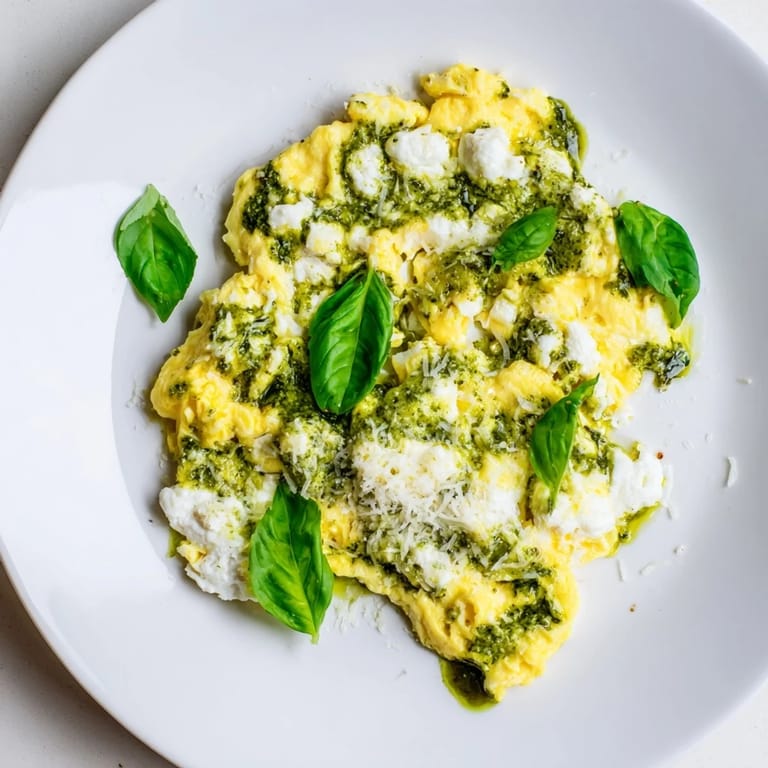
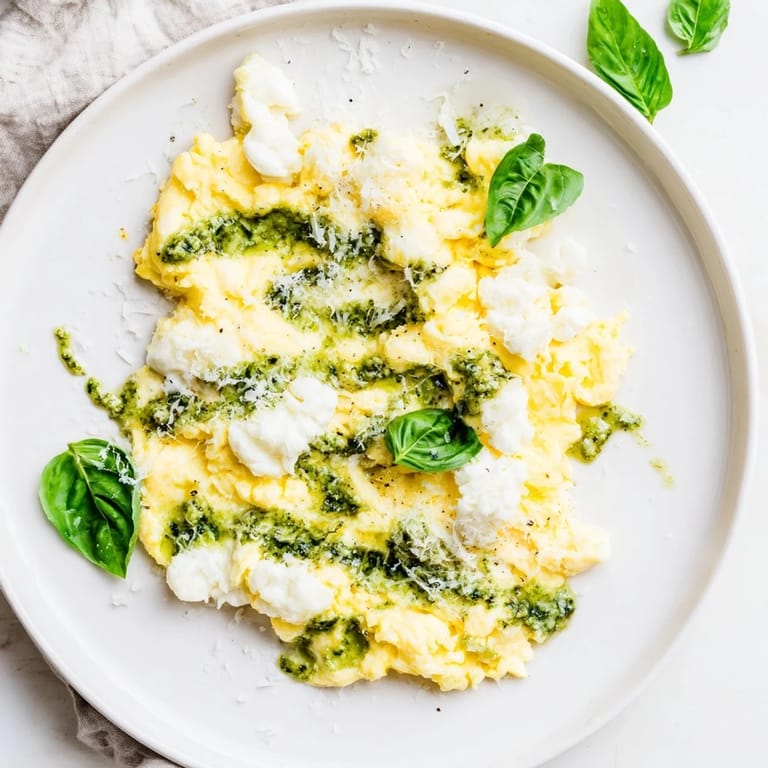
Save There's this moment on lazy Sunday mornings when I realized eggs didn't have to be boring—it happened when I had a jar of basil pesto and some cottage cheese lingering in the fridge, and suddenly everything clicked. The pesto melted into the pan first, filling the kitchen with that grassy, garlicky warmth, and by the time I added the eggs, something shifted from ordinary scramble into something that felt almost elegant. That's when I understood that the best breakfasts are the ones you accidentally discover while trying not to waste good ingredients.
I made this for my roommate one morning after they'd been complaining about their breakfast getting boring, and watching their face light up when they took the first bite—that slight surprise at how creamy and bright it tasted at the same time—made me realize this wasn't just a good use of leftovers, it was something worth making intentionally.
Ingredients
- Eggs: Four large ones give you enough to feel substantial and feed two people generously; they're the foundation, so use the freshest you can find.
- Milk or cream: A splash makes everything silkier, though it's completely optional if you're keeping things lighter.
- Cottage cheese: Full-fat tastes richer, but low-fat works just fine; this is what transforms the eggs from simple to something special.
- Basil pesto: Store-bought saves time, but if you have fresh basil and five minutes, homemade changes everything about how this tastes.
- Salt and pepper: Freshly ground pepper matters more than you'd think because it actually has flavor, not just heat.
- Fresh basil, extra pesto, Parmesan, and crusty bread: These are your finishing touches, the things that make people think you planned this instead of improvised it.
Tired of Takeout? 🥡
Get 10 meals you can make faster than delivery arrives. Seriously.
One email. No spam. Unsubscribe anytime.
Instructions
- Whisk and season:
- Crack your eggs into a bowl, add milk if using it, and whisk until the yolks and whites are fully combined and the mixture looks uniform.
- Warm the pesto:
- Heat your skillet on medium-low and add the pesto, letting it warm for about thirty seconds until you can actually smell it—that's when you know it's releasing its aromatics.
- Start the eggs:
- Pour the egg mixture into the warm pesto and let it sit undisturbed for ten to fifteen seconds so the bottom can just barely set.
- The gentle fold:
- Using a spatula, slowly push the eggs from the edges toward the center with calm, deliberate movements, not rushing it—this is how you get those soft, creamy curds instead of rubbery chunks.
- Add the cottage cheese:
- When the eggs are still visibly wet and creamy, fold in the cottage cheese and continue that gentle stirring motion until everything is just warmed through and the texture becomes pillowy.
- Plate immediately:
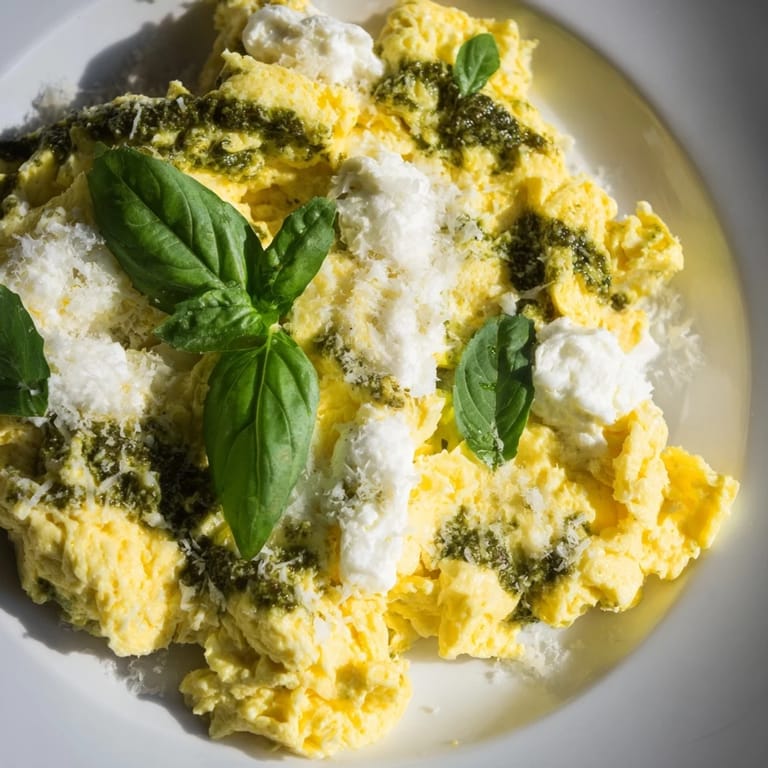
- Pull it off heat the second it looks done because eggs keep cooking even after you've moved the pan, and you want that window where it's still luscious.
 Save
Save I remember making this for someone who swore they didn't like cottage cheese, watching them take a bite and go quiet for a second, then ask for the recipe—that's when I knew the creaminess of the eggs and the brightness of the pesto had made the cottage cheese into something completely different than what they'd expected. It stopped being about the individual ingredients and became about how they melted into each other.
Why Temperature Matters More Than You Think
The whole difference between creamy eggs and rubbery ones comes down to heat management, which sounds technical but is really just about patience. Going low and slow means the curds have time to form gently instead of seizing up, and your pesto won't scorch and taste burnt. Once you internalize that medium-low is your friend here, you'll stop making tough eggs in general.
Building Flavor Without a Long Ingredient List
Pesto is the secret weapon that lets you skip all the fussy seasoning because it already has salt, garlic, oil, and brightness baked in. The cottage cheese adds richness and body without needing cream or butter, so you get something that tastes indulgent but isn't trying to be restaurant-heavy. It's one of those dishes where less is more because every ingredient is pulling its weight.
Making It Your Own
Once you understand how this works—eggs, pesto, cottage cheese—you can swap things around without losing the magic. Sun-dried tomato pesto changes the whole mood, sautéed spinach adds earthiness, or ricotta gives you a different kind of creaminess. The formula stays solid, but the variations let you make it feel new every time you make it.
- Try different pesto varieties like cilantro-lime or sun-dried tomato when you want to shift the flavor direction entirely.
- A handful of sautéed spinach or diced tomatoes stirred in at the very end adds texture and freshness without throwing off the timing.
- If you go the ricotta route instead of cottage cheese, use slightly less because it's more densely packed and creamy.
 Save
Save This dish became my answer to breakfast fatigue, the thing I reach for when I want something that tastes considered but doesn't require thinking too hard. It's proof that sometimes the best meals come from knowing how to treat simple things with care.
Recipe FAQ
- → What type of cheese is used?
Cottage cheese is gently folded into the eggs to add creaminess and protein without overpowering the pesto's fresh flavor.
- → Can I use homemade pesto?
Yes, homemade basil pesto enhances freshness, but high-quality store-bought pesto works well too.
- → How do I avoid overcooking the eggs?
Cook eggs gently over medium-low heat and remove from heat as soon as they're softly set to maintain creaminess.
- → Are there any suggested variations?
Try sun-dried tomato pesto or add sautéed spinach for different flavors and textures.
- → Can this dish be made vegetarian and gluten-free?
Yes, it naturally fits vegetarian and gluten-free diets using the listed ingredients.