 Save
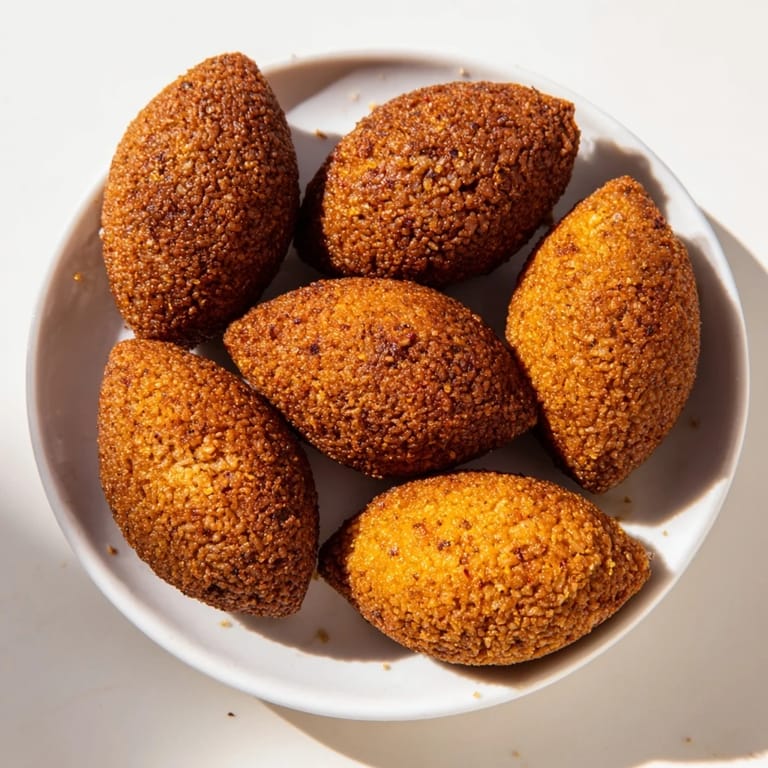
Save My neighbor Samira showed up at my door one Saturday morning with a tray wrapped in foil, still warm from her kitchen. Inside were these golden, torpedo-shaped kibbeh, crisp on the outside and impossibly savory. She laughed when I asked for the recipe, saying her grandmother would roll over if she knew she was sharing it with someone who'd never even soaked bulgur. I learned anyway, and now I make them every few weeks, usually when I need my kitchen to smell like somewhere far from here.
The first time I made kibbeh for a dinner party, I panicked halfway through shaping them because they kept splitting. My friend Layla, who was supposed to be a guest, ended up in the kitchen with me, wetting her hands every few seconds and talking me through it. We shaped forty of them together while everyone else waited, and by the time we served them, our hands were pruney and we were laughing too hard to be embarrassed. They disappeared in minutes.
Ingredients
- Fine bulgur wheat: This is the backbone of the kibbeh shell, and using fine grind is essential so it softens quickly and binds smoothly with the meat.
- Lean ground beef or lamb: Lamb gives a richer, more traditional flavor, but beef works beautifully and is what I use most often since it's easier to find.
- Small onion, finely chopped: Adds moisture and sweetness to the dough, and I've learned that grating it instead of chopping makes the texture even smoother.
- Ground allspice: This is the warm, aromatic note that makes kibbeh taste like itself, earthy and a little mysterious.
- Ground cinnamon: Just enough to add depth without making it taste like dessert.
- Black pepper: Freshly ground makes a difference here, sharpening all the other spices.
- Cold water: Helps bring the dough together, but add it slowly because too much makes it sticky and hard to shape.
- Ground meat for filling: I like using a fattier grind here since the filling needs to stay moist inside the shell.
- Pine nuts: They turn golden and buttery in the filling, adding little pockets of richness.
- Olive oil: For cooking the filling and brushing the kibbeh if you're baking them instead of frying.
- Vegetable oil for frying: Neutral and high heat tolerant, it gets the kibbeh deeply golden without any off flavors.
Tired of Takeout? 🥡
Get 10 meals you can make faster than delivery arrives. Seriously.
One email. No spam. Unsubscribe anytime.
Instructions
- Soften the Bulgur:
- Rinse the bulgur under cold water until it runs clear, then drain it well and let it sit for about ten minutes. It should swell and soften just enough to knead without being mushy.
- Make the Kibbeh Dough:
- In a large bowl, combine the bulgur, ground meat, chopped onion, salt, allspice, cinnamon, and black pepper, then knead it together with your hands, adding a little cold water if it feels too dry. You want a smooth, pliable dough that holds together when you press it.
- Prepare the Filling:
- Heat olive oil in a skillet over medium heat, add the onions, and cook until they're soft and translucent, about three minutes. Add the ground meat and cook, breaking it up with a spoon, until it's browned all over.
- Finish the Filling:
- Stir in the pine nuts, allspice, cinnamon, salt, and pepper, and cook for another few minutes until the pine nuts turn golden. Remove from heat and let it cool while you start shaping.
- Shape the Kibbeh:
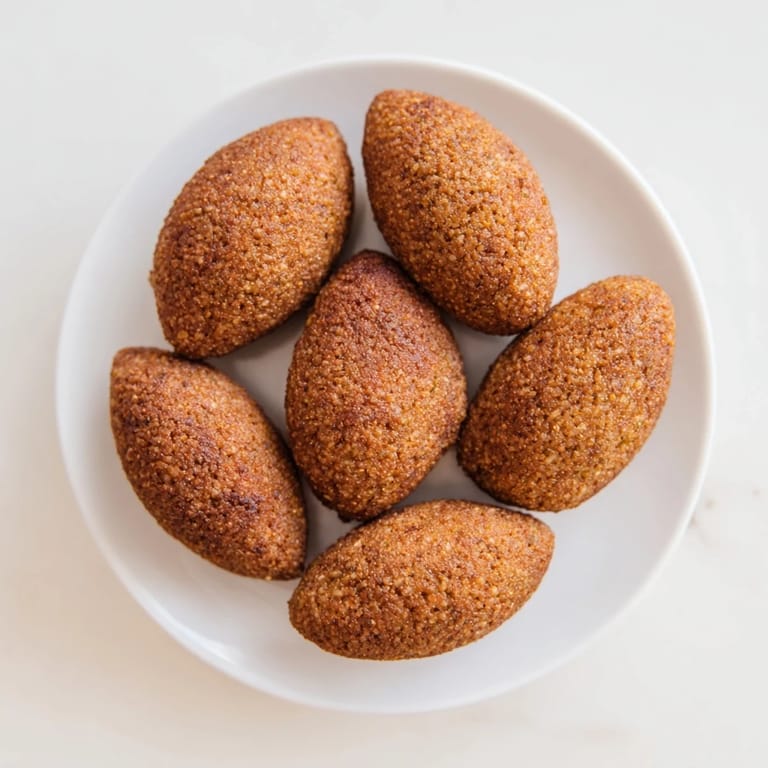
- Wet your hands, take a piece of dough about the size of a golf ball, and flatten it in your palm into a thin oval. Spoon a little filling into the center, then pinch the edges together and shape it into a smooth torpedo.
- Fry or Bake:
- If frying, heat vegetable oil to 180°C (350°F) and fry the kibbeh in batches for four to five minutes until they're deep golden and crisp, then drain on paper towels. If baking, preheat your oven to 200°C (390°F), place them on a lined baking sheet, brush with olive oil, and bake for twenty-five to thirty minutes, flipping halfway through.
 Save
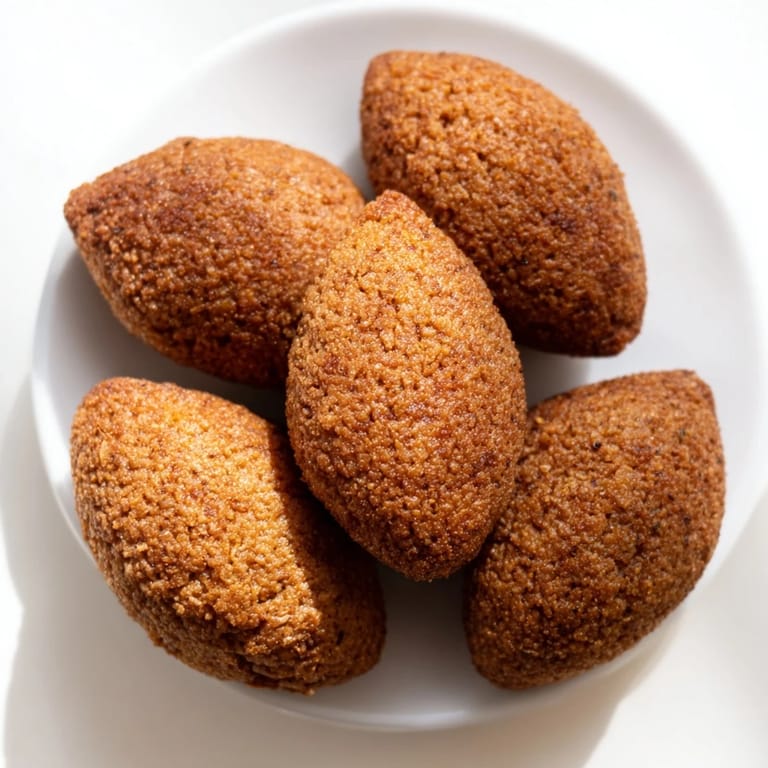
Save There's a moment when you pull the first batch out of the oil, golden and crackling, and you break one open to check the filling, and the smell that rises up is enough to make you forget you were supposed to wait until dinner. I almost always eat one standing at the stove, burning my fingers a little, reminding myself why I keep making these even when my kitchen ends up covered in bulgur dust.
Serving Suggestions
I serve kibbeh with a bowl of cold yogurt mixed with a little garlic and mint, and a simple salad of tomatoes, cucumbers, and parsley dressed with lemon and olive oil. The yogurt cools down the spices and the salad gives you something fresh and crunchy to balance all that richness. Sometimes I'll add a drizzle of tahini sauce if I have it, which makes everything taste even more luxurious.
Storage and Freezing
Kibbeh freeze incredibly well, which is why I usually double the batch and freeze half before cooking. Just place the shaped, uncooked kibbeh on a baking sheet lined with parchment, freeze them until solid, then transfer to a freezer bag. When you're ready to cook them, fry or bake straight from frozen, adding a couple extra minutes to the cooking time. Cooked kibbeh can be refrigerated for up to three days and reheated in the oven to crisp them up again.
Variations and Substitutions
If you want a vegetarian version, replace the meat in the filling with cooked lentils and sautéed mushrooms, seasoned the same way. I've also made kibbeh with a mix of lamb and beef in the shell for a deeper flavor, and swapped pine nuts for chopped walnuts when I ran out. You can bake them instead of frying for a lighter version, though I'll admit the fried ones have a crispness that's hard to beat.
- Try adding a pinch of sumac to the filling for a tangy brightness.
- Brush baked kibbeh with melted butter halfway through for extra golden color.
- Serve with pickled turnips or a squeeze of fresh lemon for contrast.
 Save
Save Every time I make kibbeh, I think about Samira showing up with that tray, and how food can be a kind of welcome before you even know you needed one. I hope these become something you make when you want your kitchen to feel a little more alive.
Recipe FAQ
- → What type of meat is used in this dish?
Lean ground beef or lamb is typically used, providing rich flavor and texture.
- → How is the bulgur prepared before mixing?
Bulgur is rinsed and soaked in cold water until softened, then drained thoroughly.
- → What spices give the distinctive taste?
Allspice, cinnamon, salt, and black pepper combine to create the characteristic warm, aromatic profile.
- → Can the croquettes be baked instead of fried?
Yes, brushing with olive oil and baking until golden is a popular alternative to deep frying.
- → What nuts are included in the filling?
Pine nuts are sautéed with the meat filling for added flavor and crunch.
- → Is there a vegetarian option for this dish?
A meat-free version uses cooked lentils and sautéed mushrooms as a flavorful filling substitute.