 Save
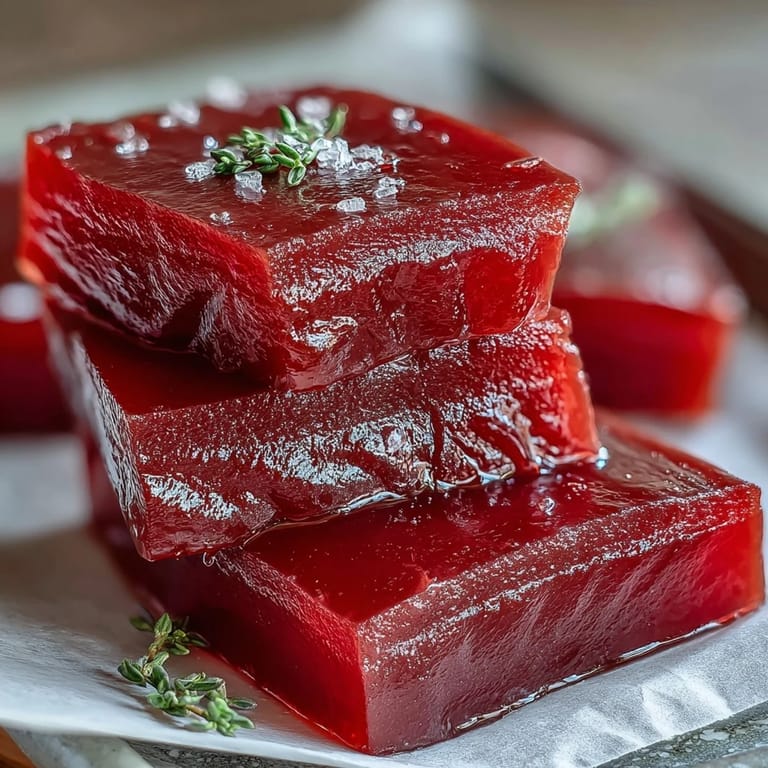
Save My neighbor Maria handed me a jar of homemade guava paste one afternoon, still warm from her kitchen, and I realized immediately why this humble condiment has survived centuries across Latin America. The first spoonful was revelatory, that perfect balance of floral sweetness and tartness that somehow tastes both rustic and refined. What struck me most was how simple the ingredient list felt compared to the complexity of flavor trapped inside, which sparked an obsession to recreate it. Now whenever I make a batch, the kitchen fills with this intoxicating tropical perfume that lingers for hours. It's become one of those recipes I make not because I need to, but because the process itself feels like meditation.
I tested this recipe on a Saturday morning when my friends were stopping by for brunch, thinking I'd have plenty of time, and somehow miscalculated the cooling phase entirely. Standing there at ten past noon with barely-set paste still glistening in the pan, I learned that patience with guava paste isn't optional, it's the whole point. By the time our gathering actually started, I sliced it into neat little squares and served it alongside some aged cheese, and everyone wanted to know where I'd bought it. That moment taught me that rushing this recipe only teaches humility.
Ingredients
- Ripe guavas (1 kg / 2.2 lbs): Look for fruits that yield slightly to pressure and smell intensely fragrant, as underripe guavas will taste thin and the overripe ones turn mushy before they cook.
- Granulated sugar (450 g / 2 1/4 cups): This isn't just sweetener, it's what creates that signature glossy sheen and firm texture that lets you slice the paste cleanly.
- Fresh lemon juice (2 tbsp): The acid brightens the guava's natural flavor and prevents the paste from tasting cloying, plus it helps with preservation.
- Water (120 ml / 1/2 cup): Start with this amount but trust your instincts as guavas vary in moisture content, adding a splash more if the mixture seems too dense early on.
Tired of Takeout? 🥡
Get 10 meals you can make faster than delivery arrives. Seriously.
One email. No spam. Unsubscribe anytime.
Instructions
- Prepare your guavas:
- Rinse them under cool water and trim away the blossom ends, then cut each fruit into quarters. If you prefer an ultra-smooth final paste, you can remove the seeds now, though they'll strain out later anyway.
- Cook the guavas tender:
- Combine the guava quarters and water in a large saucepan, bring everything to a boil over medium heat, then cover and let it simmer for 15 to 20 minutes until the fruit breaks down and becomes soft. You'll know it's ready when a fork slides through the flesh without resistance.
- Strain out the solids:
- Once the guavas cool slightly, push them through a food mill or press them through a fine mesh strainer, working in batches if needed. This step separates the smooth pulp from the seeds and skins, and yes, it takes patience, but the texture payoff is worth every extra minute.
- Calculate and combine:
- Measure how much puree you've got, then use roughly equal parts puree and sugar, adjusting if your guavas tasted particularly sweet or tart. Return the puree to your pot, add the sugar and lemon juice, and give it all a good stir.
- Cook down slowly:
- Set the heat to low and stir constantly for the next 40 to 50 minutes, scraping the bottom and sides regularly to prevent any sticking or burning. The mixture will gradually deepen in color and begin pulling away from the sides of the pan when it's ready.
- Test for doneness:
- Drop a small spoonful onto a cool plate and let it sit for a minute, then nudge it with your finger, the paste should hold its shape and not run. If it still feels loose, keep cooking and check again in five-minute intervals.
- Set and cool:
- Once the paste reaches that perfect glossy thickness, pour it into a parchment-lined loaf pan or baking dish, smooth the top, and let it rest undisturbed at room temperature for 2 to 3 hours. Resist the urge to refrigerate early as the cooling process is what sets the texture.
 Save
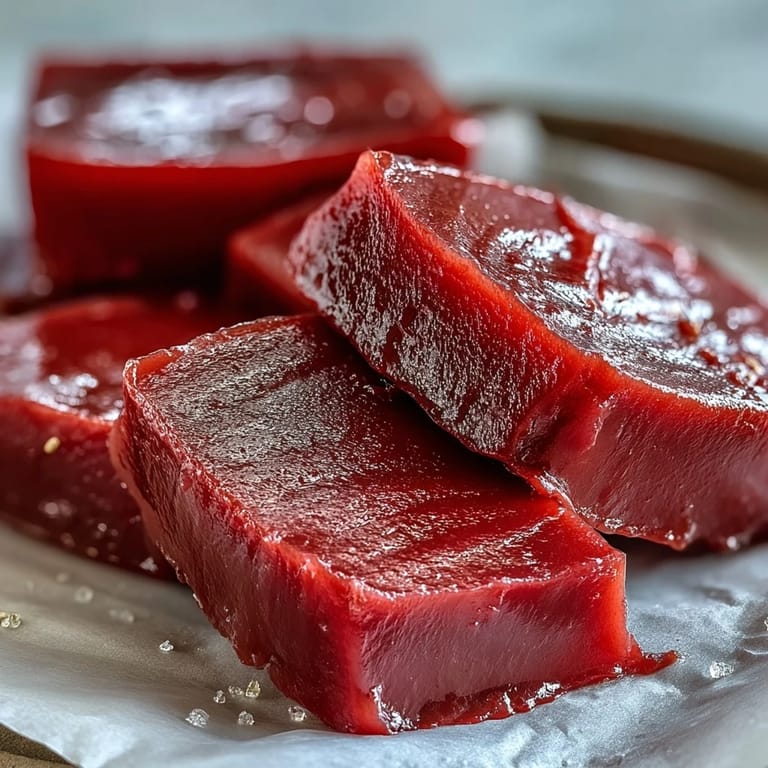
Save There's something almost ceremonial about unmolding that cooled paste and cutting into it for the first time, hearing that clean snap as the knife moves through the firm, jewel-like interior. My son wandered into the kitchen just as I was doing this one evening and asked if it was candy, which felt like the highest compliment this simple fruit condiment could possibly receive.
Storage and Shelf Life
Guava paste keeps beautifully in an airtight container in the refrigerator for up to three months, though honestly mine never lasts that long. You can also freeze it for longer storage, just cut it into portions and wrap them individually so you can pull out what you need without thawing the whole batch.
Flavor Pairings That Actually Work
Beyond the classic combination with Manchego cheese, I've discovered that guava paste sings alongside sharp aged cheddar, creamy goat cheese, or even Brie when you want something unexpected on a board. It also bridges sweet and savory beautifully, so try tucking it into empanadas, swirling it into yogurt, or using it as a glaze for roasted pork or duck if you're feeling adventurous in the kitchen.
Making It Your Own
Once you've made this recipe a few times, you'll develop instincts about how your particular guavas behave and whether you prefer your paste silkier or slightly more textured. Some cooks add a pinch of cinnamon or clove, others infuse it with vanilla or a touch of rose water, and the beauty is that the base recipe is forgiving enough to accommodate these personal touches. The real secret is respecting the slow cooking time and not rushing the process, which sounds poetic but is genuinely the only rule that matters.
- Taste your guavas before you cook, as some varieties are much sweeter than others and might need less sugar than the recipe suggests.
- If your paste seems too thick even after cooling, you can warm it slightly and fold in a tablespoon of fruit juice to loosen it without losing the texture.
- Save your beautiful slices for special occasions but don't hesitate to break out a jar just because Tuesday afternoon needs a little brightness.
 Save
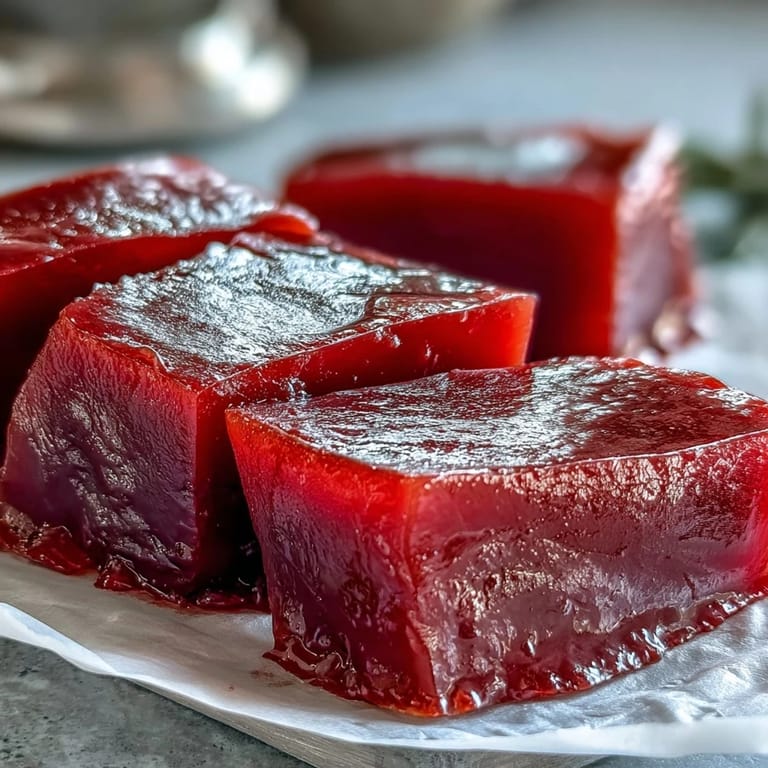
Save Making guava paste has become one of those small kitchen rituals I return to whenever I need to remember why cooking matters. It's gentle, forgiving, and rewards patience with something genuinely delicious.
Recipe FAQ
- → How do I know when the guava paste is ready?
The paste is ready when it becomes thick and glossy, holds its shape on a spoon, and pulls away from the sides of the pan. This typically takes 40–50 minutes of slow cooking.
- → Can I use frozen guavas?
Yes, frozen guavas work well. Thaw them completely before starting, and drain any excess liquid to maintain the proper consistency during cooking.
- → How should I store guava paste?
Store in an airtight container in the refrigerator for up to 3 months. For longer storage, cut into portions and freeze individually wrapped.
- → What pairs well with guava paste?
Manchego or other hard cheeses, crackers, fresh bread, or as a filling for pastries and empanadas. It also complements soft cheeses like cream cheese or goat cheese.
- → Do I need to remove the guava seeds?
Removing seeds is optional. For the smoothest paste, strain through a food mill or fine mesh sieve. Some texture from seeds is acceptable if you prefer a more rustic consistency.
- → Why add lemon juice to the paste?
Lemon juice provides acidity which balances the sweetness, enhances the natural guava flavor, and helps the paste set properly through natural pectin activation.