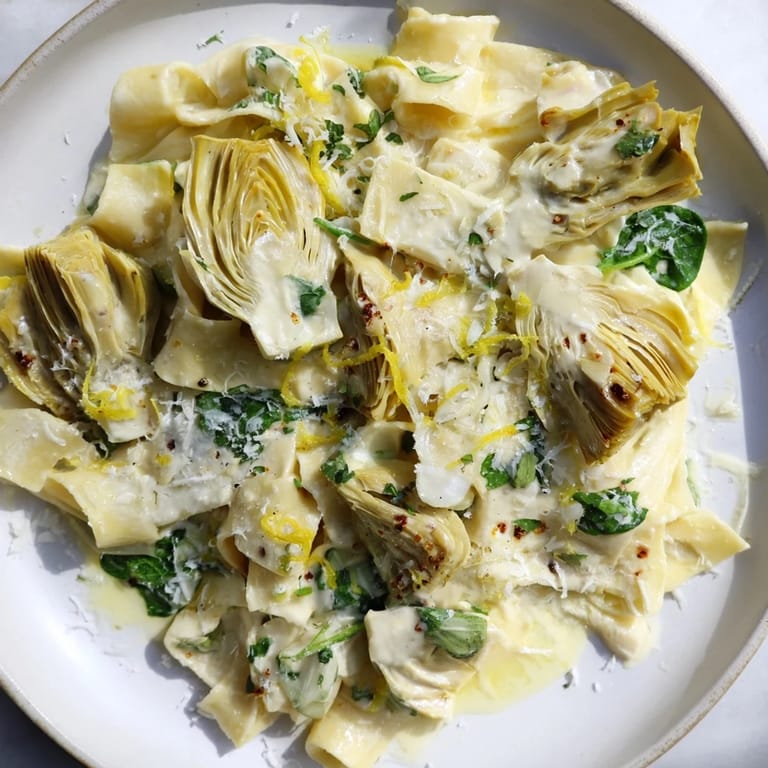
 Save
Save There's something about the way lemon and cream play together that stopped me in my tracks the first time I tasted it at a small trattoria outside Florence. The pasta was silky, the artichokes tender, and somehow it felt both light and indulgent at once. I spent the train ride home trying to reverse-engineer what made it work, and this version emerged from those kitchen experiments. It's become the dish I reach for when I want to feel like I'm cooking something special without the stress.
I made this for a friend who claimed she didn't like artichokes, and watching her ask for seconds was worth every bit of the extra chopping. We drank the last of a bottle of Pinot Grigio straight from the pot, and she still mentions that dinner whenever we talk. Sometimes the best meals aren't about impressive technique—they're about turning someone's mind inside out with flavors they didn't know they wanted.
Ingredients
- Fettuccine or linguine (350 g): The wider ribbon catches pockets of sauce better than thin pasta, and there's something satisfying about how it moves on the fork.
- Canned artichoke hearts (400 g): Fresh artichokes are beautiful but take forever; these are reliable and tender, and I've learned there's no shame in that shortcut.
- Baby spinach (2 cups, optional): It melts into the sauce almost invisibly, adding color and nutrients without any bitter edge.
- Garlic (2 cloves) and shallot (1 small): Mince them fine so they dissolve into the cream rather than announce themselves; this is where patience changes everything.
- Lemon zest and juice: Fresh lemon is the entire backbone of this dish; don't even think about using bottled juice or you'll taste the difference immediately.
- Heavy cream (200 ml): The fat carries the flavors and makes the sauce silky, but don't use ultra-pasteurized cream if you can help it.
- Parmesan (60 g): Freshly grated is warmer and more integral than pre-shredded; it melts differently and tastes like it belongs.
- Unsalted butter (2 tbsp): This is your emulsifier, the thing that makes the whole sauce come together without breaking.
- Extra-virgin olive oil (2 tbsp): Use one you actually like tasting, because it matters here.
- Salt, black pepper, and red pepper flakes: The flakes are optional but they're my secret weapon—just a whisper of heat lifts everything.
- Fresh basil or parsley: Tear it by hand just before serving so it stays bright and doesn't bruise into sadness.
Tired of Takeout? 🥡
Get 10 meals you can make faster than delivery arrives. Seriously.
One email. No spam. Unsubscribe anytime.
Instructions
- Start the water:
- Bring a large pot of salted water to a boil—it should taste like the sea. The salt is doing more than seasoning; it's flavoring the pasta from the inside out as it cooks.
- Cook the pasta:
- Drop the pasta in and set a timer for a minute before the package says it's done. You want it to have the slightest resistance when you bite into it, not soft enough to fall apart.
- Build the base:
- While the pasta cooks, warm olive oil and butter in a large skillet over medium heat. The moment you smell the nutty butter fragrance, you're ready for the next step.
- Soften the aromatics:
- Add your minced shallot and garlic, stirring gently for about two minutes until they turn translucent and the rawness disappears. Don't let them brown or they'll taste bitter.
- Toast the artichokes:
- Stir in the quartered artichoke hearts and give them three minutes in the pan, letting them develop a light golden edge that brings out their nutty sweetness.
- Add brightness:
- Scatter the lemon zest across everything and let it wake up the pan with its aroma. If you're using spinach, add it now and let it wilt down into tenderness.
- Build the cream sauce:
- Pour in the heavy cream slowly, stirring as you go, then let it come to a gentle simmer. This is the moment where everything softens and becomes luxurious.
- Season carefully:
- Lower the heat, stir in the Parmesan, lemon juice, salt, pepper, and a pinch of red pepper flakes if you like. Taste as you go because the lemon flavor can shift depending on which lemon you used.
- Bring it together:
- Add the drained pasta directly to the sauce, tossing gently so every strand gets coated. If it looks too thick, add splashes of that reserved pasta water until it's creamy and flows slightly on the plate.
- Finish and serve:
- Divide among four bowls and scatter fresh basil or parsley on top. Grate more Parmesan over it if you want, because there's no such thing as too much.
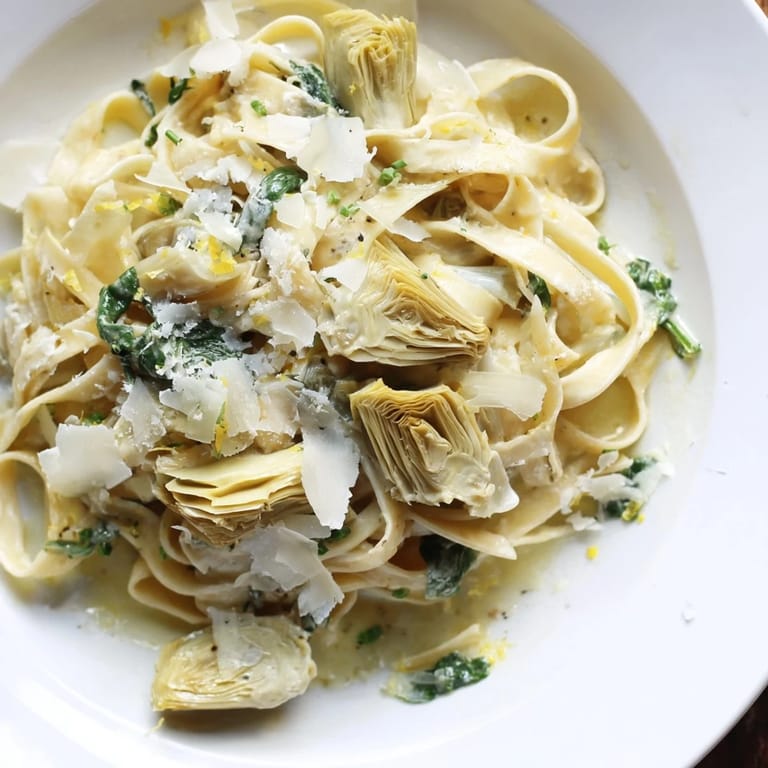 Save
Save This became the dish I make when I want to remind myself that cooking isn't about complexity—it's about respecting good ingredients and not overthinking them. The first time someone told me this pasta tasted like a restaurant, I realized I'd been searching for that compliment in all the wrong places.
Why This Combination Works
Artichokes have a subtle earthiness that needs something bright to shine, which is exactly what fresh lemon brings to the table. Cream rounds out the acid so nothing tastes sharp or one-dimensional, while Parmesan adds a savory depth that makes you want another bite. The combination feels effortless but it's actually been perfected over centuries of Italian cooking—you're not inventing anything here, just honoring what works.
Timing and Variations
The beauty of this recipe is how forgiving it is about timing. If your pasta finishes before the sauce is ready, toss it with a little olive oil so it doesn't stick. If you want to add protein, shrimp turns it into something elegant for company, while shredded chicken makes it more substantial for bigger appetites.
Pairing and Storage
A crisp white wine—Pinot Grigio, Sauvignon Blanc, or even a light Vermentino—is almost mandatory here because the acidity in the wine mirrors the lemon in the dish. This pasta is best eaten fresh, but leftovers keep in the fridge for two days and reheat gently with a splash of cream or pasta water to restore the sauce's silkiness.
- For a vegan version, swap the cream and Parmesan for full-fat coconut milk and nutritional yeast, and the dish becomes something equally delicious and entirely plant-based.
- If you can't find good canned artichokes, frozen ones work beautifully and often cost less.
- Serve this with crusty bread to drag through every drop of sauce, because that's where all the memory lives.
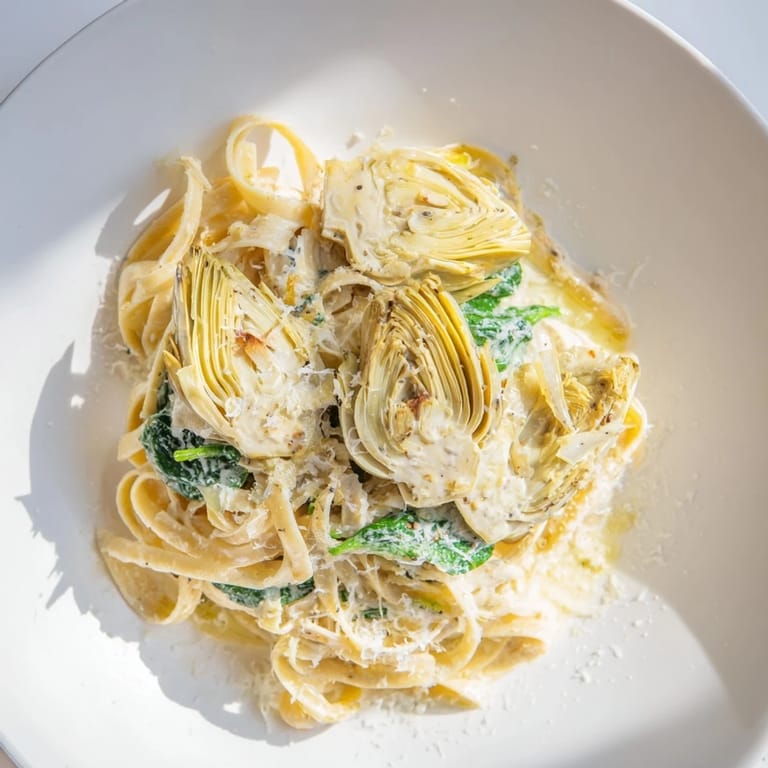 Save
Save This pasta reminds me that some of the best meals come from simplicity and intention, not from trying to impress. Make this when you want to feel like you've cooked something that matters.
Recipe FAQ
- → Can I use other pasta types for this dish?
Yes, fettuccine or linguine work best to hold the creamy sauce, but penne or rigatoni can also be suitable alternatives.
- → How do I make the sauce silky and smooth?
Adding reserved pasta water helps loosen the sauce, ensuring it coats the pasta evenly and creates a silky texture.
- → Is it possible to add protein to this dish?
Cooked chicken or shrimp can be incorporated for extra protein without overpowering the delicate flavors.
- → What can I use instead of heavy cream for a lighter version?
A plant-based cream substitute or half-and-half can lighten the sauce while maintaining creaminess.
- → How should fresh herbs be added?
Fresh basil or parsley is best sprinkled just before serving to preserve their bright, fresh aroma and flavor.