 Save
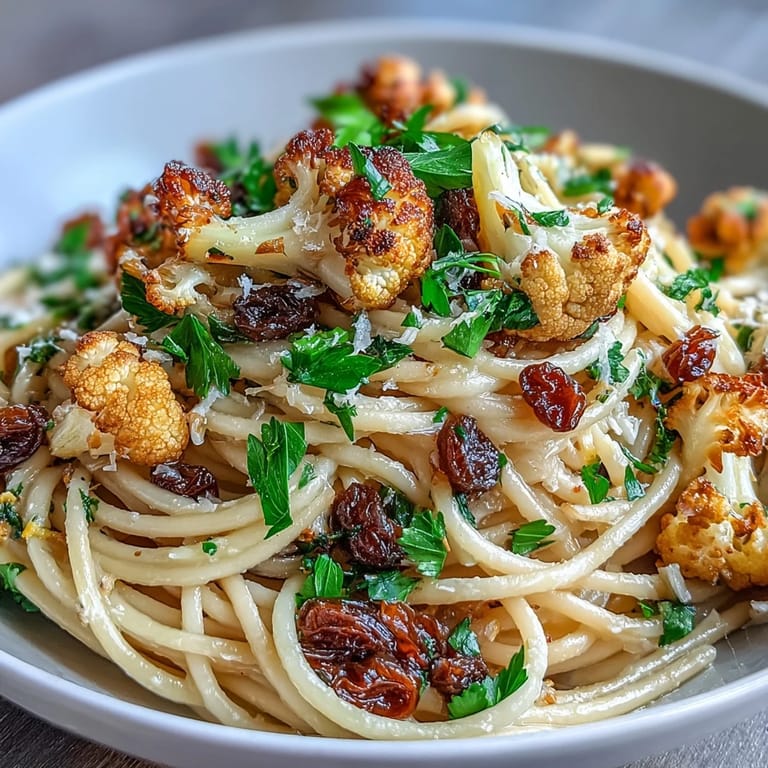
Save The smell of garlic and anchovies hitting hot olive oil always pulls me straight into the moment, no distractions, just the sizzle and that deep, salty aroma filling the kitchen. I wasn't sure about adding raisins to a savory pasta at first—it sounded like one of those ideas that works in theory but falls apart on the plate. But the first time I tossed them in with roasted cauliflower and those melted anchovies, the sweetness didn't compete; it softened everything, made the whole dish feel rounder, more complete. Now it's one of those recipes I make when I want something that feels indulgent but leaves me feeling light. It's become my go-to for impressing guests without the stress.
I made this for a small dinner party last spring, and one of my friends, who claimed she hated anchovies, went back for seconds without realizing they were in there. She kept asking what made the sauce taste so rich, and when I finally told her, she laughed and said maybe she'd been wrong about them all along. That night taught me that anchovies aren't about fishiness—they're about depth, about building flavor without shouting. The lemon zest at the end was a last-minute addition that time, something I grabbed on instinct, and it brightened everything just enough to make the dish feel intentional. It's funny how a little spontaneity in the kitchen can turn into the thing you never skip again.
Ingredients
- Whole wheat spaghetti: The slight nuttiness of whole wheat holds up beautifully against the bold flavors here, and it adds a bit more chew and substance than regular pasta.
- Cauliflower: Roasting transforms it from bland to caramelized and sweet, with crispy edges that give the dish texture and a roasted, almost nutty backbone.
- Anchovy fillets: They melt into the oil and disappear, leaving behind a salty, umami-rich base that makes everything taste more layered without any fishiness.
- Raisins: Their natural sweetness cuts through the saltiness and adds little bursts of flavor that surprise you in the best way.
- Garlic and chili: Garlic brings warmth and aroma, while the chili adds just enough heat to keep things interesting without overpowering.
- Capers: Briny and sharp, they add pops of acidity that balance the sweetness of the raisins.
- Lemon zest: A bright, citrusy finish that ties everything together and lifts the heavier flavors right before serving.
- Flat-leaf parsley: Fresh, grassy, and vibrant, it adds color and a clean, herbal note that makes the dish feel complete.
- Extra virgin olive oil: Use a good one here—it carries the garlic and anchovy flavors and coats the pasta with a silky, fruity richness.
Tired of Takeout? 🥡
Get 10 meals you can make faster than delivery arrives. Seriously.
One email. No spam. Unsubscribe anytime.
Instructions
- Roast the cauliflower:
- Toss the florets with olive oil, salt, and pepper, then spread them out on a baking sheet so they have room to breathe and caramelize. Roast at 220°C (425°F) for 18 to 20 minutes, flipping halfway, until they're golden brown and tender with crispy edges.
- Cook the spaghetti:
- Boil the pasta in well-salted water until it's al dente, with just a bit of bite left in the center. Before draining, scoop out half a cup of the starchy pasta water—it's liquid gold for bringing the sauce together later.
- Build the base:
- In a large skillet over medium heat, warm the remaining olive oil and add the garlic and chili, stirring for about a minute until fragrant but not browned. Toss in the anchovies and capers, pressing the anchovies gently with a wooden spoon so they dissolve into the oil and create a savory, rich base.
- Combine everything:
- Add the raisins and roasted cauliflower to the skillet, tossing gently to coat them in the anchovy oil. Add the drained spaghetti and a splash of the reserved pasta water, tossing everything together until the pasta is glossy and well coated.
- Finish and serve:
- Remove the skillet from the heat, then toss in the lemon zest and chopped parsley, mixing well. Taste and adjust the seasoning with more salt or pepper if needed, then serve immediately with a drizzle of olive oil and extra parsley on top.
 Save
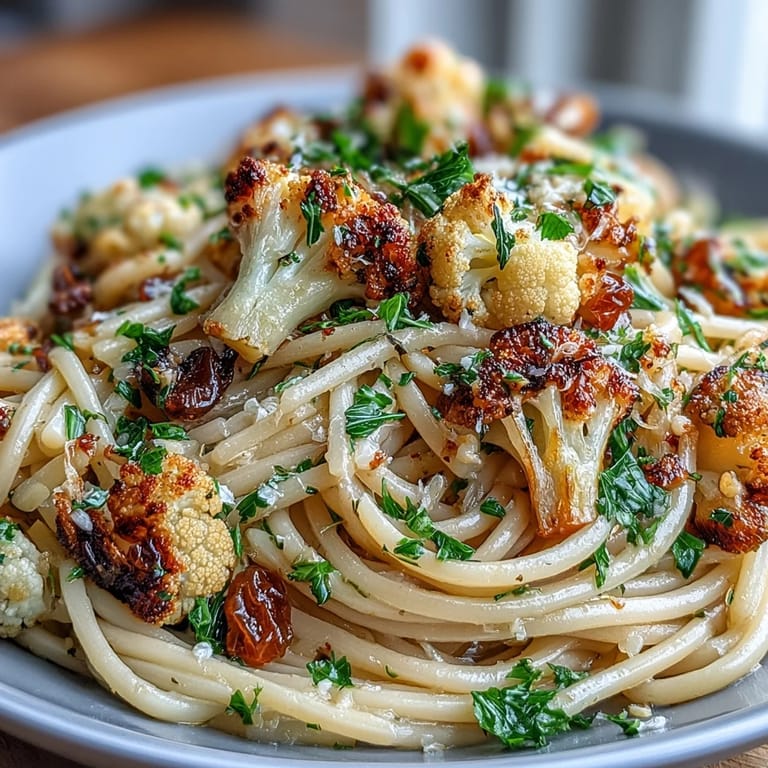
Save One evening, I made this after a long day when I didn't feel like thinking too hard about dinner, and it turned into one of those meals where I actually sat down, put my phone away, and just ate. The balance of salty, sweet, and bright made every bite feel intentional, like someone had put thought into it even though it came together so easily. It reminded me that good food doesn't have to be complicated—it just has to make you want to keep your fork moving.
How to Store and Reheat
Leftovers keep well in an airtight container in the fridge for up to three days, though the cauliflower will soften a bit as it sits. When reheating, add a splash of water or olive oil to a skillet over medium heat and toss the pasta until warmed through—it brings back some of that silky texture. The microwave works in a pinch, but the stovetop method keeps the flavors brighter and the pasta from drying out.
Variations to Try
If you want more crunch, toast some pine nuts or panko breadcrumbs in olive oil until golden and sprinkle them on top just before serving. Swap the raisins for currants or chopped dried apricots if you want a slightly different sweetness, or leave them out entirely if you prefer a purely savory dish. For a gluten-free version, use your favorite gluten-free spaghetti and make sure any breadcrumbs or add-ins are certified gluten-free.
Serving Suggestions
This pasta is hearty enough to stand on its own, but a simple arugula salad with lemon and olive oil on the side adds a peppery freshness that balances the richness. A crisp, dry white wine like Verdicchio or Pinot Grigio cuts through the umami and complements the sweetness of the raisins beautifully. If you're feeding a crowd, double the recipe and serve it family-style in a big bowl with extra parsley and lemon wedges on the table.
- Pair with a light, lemony salad to keep the meal feeling fresh and balanced.
- Serve with crusty bread to soak up any extra sauce left in the bowl.
- Pour a chilled white wine to complement the salty and sweet flavors.
 Save
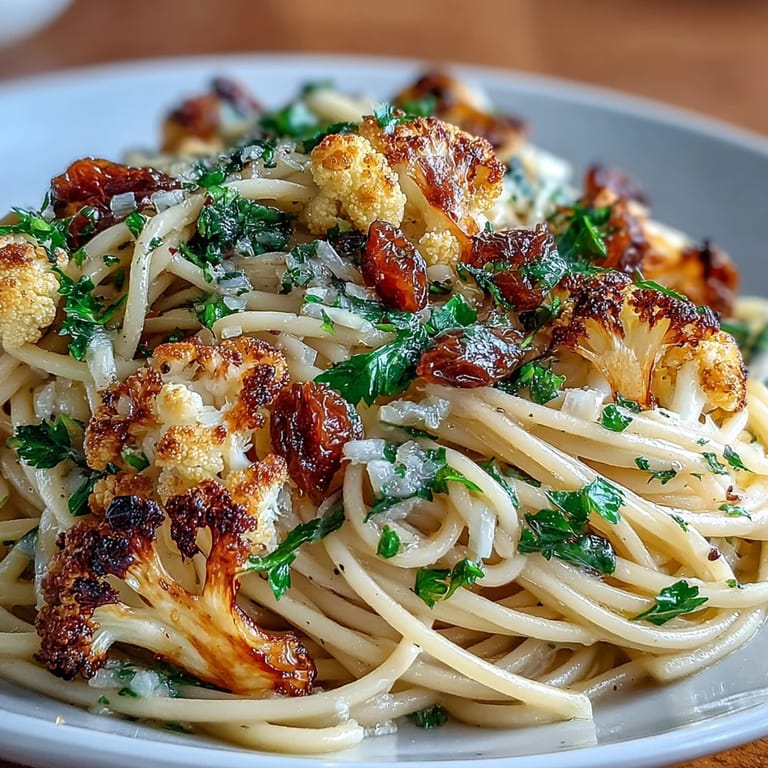
Save This dish has a way of making weeknight dinners feel a little more special without asking much of you. I hope it becomes one of those recipes you reach for when you want something satisfying, flavorful, and just a little bit surprising.
Recipe FAQ
- → Can I substitute the anchovies with something else?
While anchovies provide essential umami depth, you can substitute with 1-2 tablespoons of miso paste or sun-dried tomatoes for a vegetarian option, though the flavor profile will differ significantly.
- → How do I prevent the cauliflower from becoming mushy?
Roast the cauliflower at high heat (220°C/425°F) in a single layer without overcrowding the baking sheet. Turn once during cooking to ensure even caramelization and maintain a tender yet firm texture.
- → Can I prepare any components ahead of time?
Yes, you can roast the cauliflower up to 2 days in advance and store it refrigerated. Reheat gently in the skillet before combining with the pasta for best results.
- → What type of raisins work best in this dish?
Both dark and golden raisins work beautifully. Golden raisins offer a milder, slightly tangier sweetness, while dark raisins provide deeper, richer flavor notes that complement the anchovies well.
- → How can I make this dish more substantial?
Add toasted pine nuts, breadcrumbs for crunch, or incorporate white beans for extra protein and fiber. You can also increase the pasta portion or serve alongside a simple arugula salad.
- → Why should I reserve pasta water?
Pasta water contains starch that helps create a silky sauce and binds all ingredients together. Add it gradually to achieve your desired consistency and ensure the sauce coats the spaghetti perfectly.